
2026 Top Solar Battery Pack Suppliers for Global Buyers
Choosing a Solar Battery Pack supplier in 2026 involves more than comparing quoted prices. Buyers need to assess usable capacity, cell chemistry, battery management systems, cycle-life test conditions, and warranty terms. A specification sheet can look convincing. The details matter.
This guide introduces suppliers serving different markets and project sizes, from compact residential storage to larger commercial systems. It considers practical questions: Can the supplier provide consistent product documentation? Are performance figures tied to clear test conditions? How are technical support, replacement parts, and shipping handled after an order leaves the factory? These details can affect installation planning and long-term operating costs.
Supplier claims still need verification. Product availability, certifications, warranty coverage, and service networks may differ by model and destination. Buyers should request current datasheets, written warranty terms, relevant test reports, and references for comparable installations. A supplier’s stated cycle life, for example, is difficult to evaluate without knowing the test temperature, discharge depth, and remaining-capacity threshold. Not always clear.
The companies discussed here are starting points for research, not automatic endorsements. Compare like with like, check recent documents directly with each supplier, and match battery specifications to the intended inverter and project conditions. Even a careful shortlist can miss a concern. Independent technical review may be worthwhile before a large purchase.
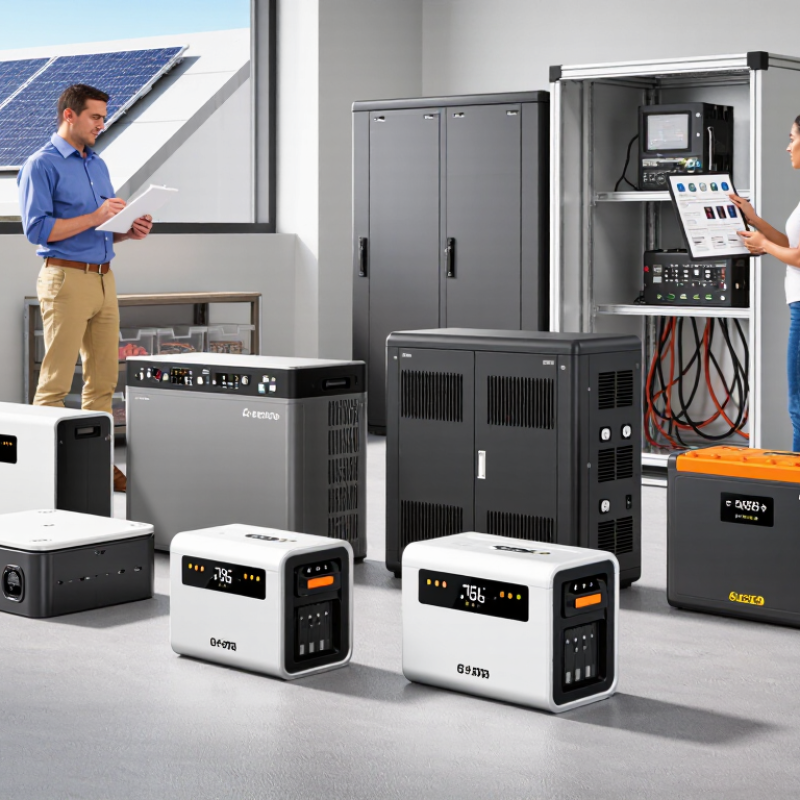
Solar Battery Pack Fundamentals: LFP and NMC Chemistries for Global Buyers
Solar Battery Pack Fundamentals: LFP and NMC Chemistries for Global Buyers
LFP and NMC are common lithium-ion chemistries, but they serve different priorities. LFP typically offers strong thermal stability and long cycle life, while NMC can provide greater energy density in a smaller pack. For a home system beside a garage wall, that difference may affect available capacity, clearance, and installation planning. Chemistry alone does not determine safety or service life. Cell quality, pack design, controls, and temperature management matter too.
The International Energy Agency’s Global EV Outlook 2024 reported that LFP supplied about 40% of the global electric-car battery market in 2023, up from under 10% in 2020. That is a useful signal of wider adoption, not a direct forecast for solar storage. In Batteries and Secure Energy Transitions, the IEA reported that battery storage additions reached 42 GW in 2023, a 130% year-on-year increase. The market is growing quickly. But applications differ.
For daily solar shifting, buyers often compare LFP cycle-life claims, usable capacity, warranty terms, and operation across local temperatures. NMC may suit projects where compact size carries more value, though thermal controls deserve careful review. Ask suppliers for test conditions behind cycle-life figures; a number without temperature and depth-of-discharge details can mislead. I would not choose from chemistry labels alone. Room layout and real load patterns can change the better fit.
| Comparison Dimension | LFP (Lithium Iron Phosphate) | NMC (Nickel Manganese Cobalt Oxide) | What Global Buyers Should Check |
|---|---|---|---|
| Typical nominal cell voltage | About 3.2 V per cell | About 3.6–3.7 V per cell | Confirm the complete pack’s nominal voltage, operating range, and compatibility with the inverter and charge controller. |
| Cell-level gravimetric energy density | Typically about 90–160 Wh/kg | Typically about 150–250 Wh/kg | These are indicative ranges; actual values vary by cell design and product generation. Pack-level energy density is lower because of enclosure, wiring, cooling, and protection systems. |
| Cycle-life considerations | Often selected for applications prioritizing long cycle life; qualifying products may be rated for several thousand cycles. | Cycle-life ratings vary widely by cell design and operating conditions; compare the warranted rating rather than chemistry alone. | Request the cycle-life test conditions, including temperature, charge/discharge rate, depth of discharge, and end-of-life capacity threshold. Check the product warranty separately. |
| Thermal behavior | Generally offers greater thermal stability than NMC, but still requires a properly engineered battery management and protection system. | Requires careful thermal and electrical management; cell design and pack engineering affect safety performance. | Review safety test reports, temperature limits, protective features, and installation requirements for the complete battery system. |
| Relative weight and volume | Typically heavier or larger for the same stored energy compared with higher-energy-density alternatives. | Higher cell-level energy density can support a lighter or more compact design for a given energy capacity. | Compare usable energy and complete-pack dimensions and weight, not cell-level figures alone. |
| Common solar-storage fit | Often considered for stationary storage where cycle life, durability, and thermal stability are priorities. | May suit installations where compact size or lower weight is important, subject to system design and safety requirements. | Assess daily cycling, ambient conditions, available installation space, backup needs, and the required usable capacity. |
| Battery management and integration | A battery management system (BMS) monitors cell voltage, current, and temperature and provides protective controls. | A BMS is likewise required to monitor and protect the battery within its specified operating limits. | Confirm inverter communication compatibility, supported protocols, charge/discharge limits, fault handling, and firmware support. |
| Transport and safety documentation | Requirements depend on the product, shipping route, and destination market. | Requirements depend on the product, shipping route, and destination market. | For transport, request applicable UN 38.3 test documentation. For stationary systems, check relevant market standards and local installation codes, such as IEC 62619, UL 1973, UL 9540, or NFPA 855 where applicable. |
| Supplier and product due diligence | For either chemistry, verify cell and pack specifications, traceability, quality controls, warranty terms, service arrangements, and documented test results. | Confirm that certificates and reports apply to the exact battery model and configuration being purchased. | |
