
How to Adjust Pop Up Sprinklers for Even Coverage?
Even a small spray-pattern error can leave brown grass beside saturated soil. Adjusting Pop Up Sprinklers helps distribute water more evenly, reduce runoff, and protect plant health. The task sounds simple, but nozzle choice, water pressure, spacing, and wind all influence performance.
The U.S. Environmental Protection Agency’s WaterSense program reports that outdoor water use can represent more than 30% of household water consumption. In dry regions, that share may reach 60%. These figures explain why sprinkler adjustment deserves careful attention, rather than quick visual guesses. The Irrigation Association also emphasizes matched precipitation and proper system scheduling as key practices for efficient landscape irrigation. A rotating nozzle and fixed spray nozzle may deliver water at very different rates, even within the same zone.
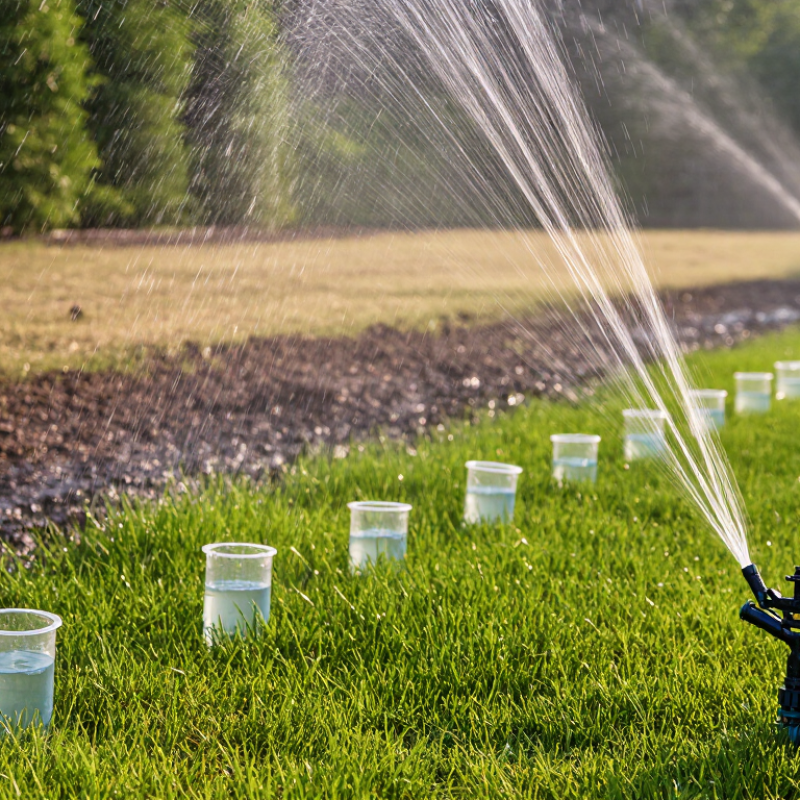
Look closely at the lawn after one cycle. Is the soil near the sprinkler muddy while the far edge remains dusty? That pattern often indicates poor head-to-head coverage, clogged nozzles, incorrect arc settings, or excessive pressure. A flat-blade screwdriver, pressure gauge, and catch-can test can reveal problems that casual inspection misses. Place identical cans across the zone, run the system, and compare water depths. The results may be uneven.
Perfect uniformity is not always realistic. Wind changes quickly, and mature shrubs can block spray paths. Still, measured adjustments usually outperform guesswork. This guide explains how to inspect, rotate, and fine-tune pop-up sprinkler heads, while recognizing when a nozzle replacement or professional irrigation assessment is the more reliable choice.
Identify Sprinkler Types, Nozzle Patterns, and Manufacturer Specifications
How to Adjust Pop Up Sprinklers for Even Coverage?
Identify the sprinkler type before changing its setting. Fixed spray heads throw a fan-shaped pattern, while rotary heads distribute narrow streams over longer distances. Adjustable arc heads cover selected angles, not full circles. The Irrigation Association recommends head-to-head coverage, meaning each spray should reach the next sprinkler. Measure the actual distance with a tape, not by guessing.
Nozzle pattern matters. A quarter-circle nozzle belongs in a corner, while a half-circle nozzle suits an edge. Full-circle nozzles work best in open lawn areas. Check the manufacturer’s flow rate, operating pressure, radius, and precipitation-rate data. A mismatched nozzle can create dry stripes beside soggy patches. It happens easily. WaterSense technical guidance identifies pressure regulation as important for reducing misting and improving spray performance; its labeled irrigation products must demonstrate measurable efficiency improvements, commonly around 20 percent compared with conventional options.
Adjust the arc with the correct tool, then test each zone for ten minutes. Place shallow cans across the lawn and compare water depth. The Irrigation Association’s audit practices use catch-can measurements to evaluate distribution uniformity, rather than relying on visual appearance alone. If one can collects half as much water, inspect pressure, clogged filters, tilted heads, and nozzle wear. My own field checks often reveal a second problem: trees or edging block the spray. Repositioning may outperform repeated adjustment. Manufacturer charts are useful, but site conditions still require judgment.
