7 Best Vibratory Dryers for Global Buyers?
Choosing the right Vibratory Dryer is rarely a simple matter of comparing prices or stainless-steel finishes. Global buyers must examine moisture targets, material behavior, energy use, cleaning access, and regional service support. A powder that moves smoothly in a laboratory tray may bridge, overheat, or spill inside a full-scale production unit. Small details matter. Think of sticky granules, uneven feed rates, and warm exhaust air leaving the chamber.
Professor Arun S. Mujumdar, a widely recognized drying specialist and Professor Emeritus at McGill University, states, “Drying is a complex operation involving simultaneous heat and mass transfer.” This principle remains practical for every purchasing decision. A reliable Vibratory Dryer must control vibration, airflow, residence time, and product temperature together. Ignoring one variable can create hidden losses.
This guide reviews seven leading options for international buyers. It considers capacity, construction quality, drying performance, maintenance demands, and supplier credibility. It also looks beyond catalog claims. Are spare parts available in your region? Can operators inspect the discharge area without long shutdowns? Does the manufacturer provide meaningful test data?
No machine is perfect. That deserves honesty. Product properties change, operating conditions drift, and impressive specifications may not reflect factory reality. The strongest choice depends on your material, process limits, and long-term operating plans. Use this comparison as a practical starting point, then validate each candidate through testing, references, and a clear technical discussion with the supplier.
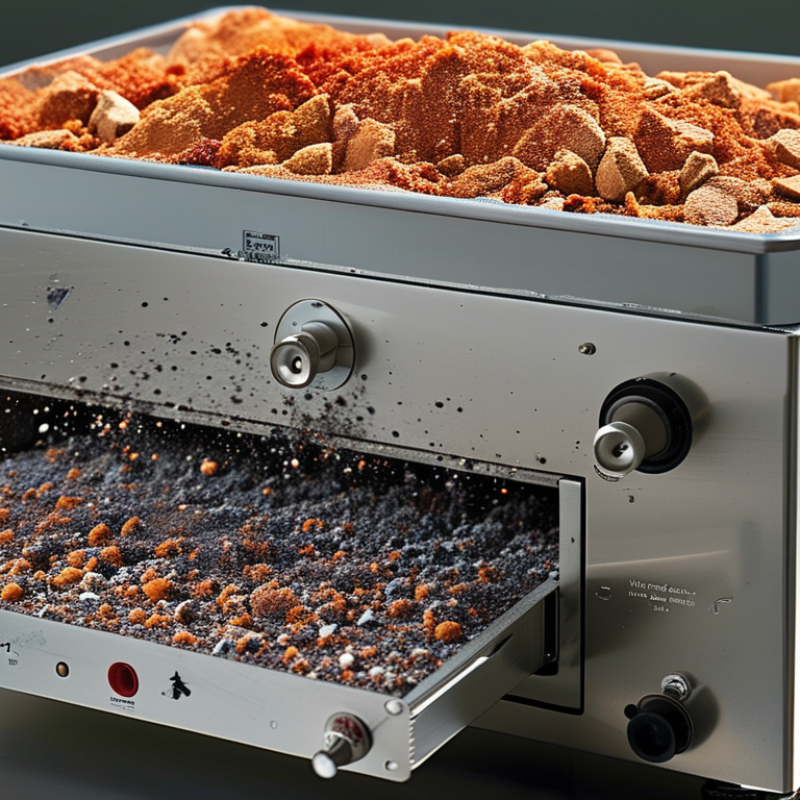
What Is a Vibratory Dryer and How Does It Work?
A vibratory dryer uses controlled movement and heated air to remove moisture from solid materials. Inside, a perforated conveying deck vibrates at a selected frequency and amplitude. The vibration spreads particles into a shallow, moving layer. Heated air then passes through the bed, contacting more surfaces than in a static tray dryer. The material advances gradually, while airflow carries away evaporated moisture.
This design suits granules, crystals, pellets, and some fragile powders. Operators adjust vibration, deck angle, air temperature, and residence time. A practical example is visible during commissioning: wet granules enter as a dense layer, then leave lighter, warmer, and easier to handle.
Poor airflow distribution can create damp pockets. That problem is easy to underestimate.
Energy efficiency deserves close attention.
The U.S. Department of Energy reports that process heating represents about 51% of industrial energy use in the United States. The Industrial Technologies Program, Improving Process Heating System Performance, identifies airflow control, insulation, and heat recovery as important efficiency measures. The European Commission’s JRC BREF for the Food, Drink and Milk Industries also highlights heat recovery and optimized drying conditions.
These findings matter when global buyers compare seven vibratory dryers, not only their purchase prices. In real plants, a slightly slower dryer may consume less energy and protect product quality better. No setting is perfect. Validation should include moisture uniformity, outlet temperature, dust control, and seasonal operating conditions.
Key Factors for Comparing Vibratory Dryers Worldwide
7 Best Vibratory Dryers for Global Buyers?
When comparing vibratory dryers worldwide, buyers should examine more than rated capacity. Throughput depends on material shape, moisture level, residence time, and discharge conditions. A unit handling 500 kilograms per hour on paper may perform differently with sticky or fragile parts. Request test data using your actual material.
Heat-sensitive products need precise temperature control and gentle airflow. Check vibration amplitude, frequency adjustment, air distribution, and drying uniformity. Inspect the contact surfaces carefully. Smooth welds reduce residue buildup and simplify cleaning. Noise levels, dust control, access doors, and emergency stops also affect daily operation.
Energy use deserves close attention. Compare heater efficiency, fan power, insulation, and heat recovery options. Maintenance teams should review bearing access, screen replacement, lubrication points, and spare-part availability in the destination country. Local technical support can matter more than a slightly lower purchase price. Compliance documents should match the buyer’s region and process requirements.
A lower price can mislead. Imported equipment may involve difficult installation, unfamiliar controls, or delayed service. No comparison is perfect. I would still require a material trial, a clear performance guarantee, and references from similar applications. This step often exposes problems that brochures hide. Small details matter.
Seven Vibratory Dryer Types for Different Industrial Needs
7 Best Vibratory Dryers for Global Buyers?
Seven Vibratory Dryer Types for Different Industrial Needs
Vibratory dryers serve different materials, moisture levels, and production targets. A vibratory fluid-bed dryer suits granules, powders, and heat-sensitive particles. It combines vibration with controlled airflow, improving contact between hot air and product. A vibratory conveyor dryer supports continuous processing, especially for sliced food, minerals, and pellets. Operators can adjust residence time through vibration speed and deck length. A vibratory tray dryer offers gentle, layered drying for fragile materials. It is useful when particle breakage must remain low.
A vibratory vacuum dryer removes moisture at reduced pressure and lower temperatures. It fits pharmaceutical, chemical, and specialty material applications. A batch vibratory dryer works well for changing recipes or smaller production volumes. A continuous vibratory dryer supports stable, high-throughput operations with fewer manual handling steps. A sanitary vibratory dryer uses cleanable surfaces and carefully designed contact areas. It is suitable for hygienic processing environments. Selection should consider feed size, inlet moisture, final moisture, thermal sensitivity, and cleaning requirements. One design may not solve every problem.
Tips: Request practical test data before purchase. Check residence-time distribution, energy use, dust control, and discharge consistency. Ask whether spare parts and technical support are available in your region. Measure actual product temperature, not only air temperature. Small testing errors can affect scale-up. I have seen systems perform well in trials but struggle with sticky feed during long production runs. That detail deserves honest review.
7 Best Vibratory Dryers for Global Buyers
Typical operating-temperature midpoints for seven vibratory dryer types used in different industrial applications
Lower-temperature systems are generally preferred for heat-sensitive products, while higher-temperature designs are commonly selected for robust minerals, salts, aggregates, and other inorganic materials. The values shown are indicative engineering ranges and should be confirmed through product testing and process evaluation.