
7 Car Alternator Buying Tips for Global Buyers
Buying a Car Alternator for international use requires more than comparing prices online. A unit may look identical, yet differ in output, mounting design, pulley type, or voltage control. These small differences can leave a vehicle with a weak battery and an expensive repair.
This guide introduces seven practical buying tips for global buyers. It focuses on real sourcing concerns, including vehicle compatibility, rated amperage, remanufactured quality, supplier verification, warranty terms, shipping protection, and regional requirements. Check the part number carefully. Then confirm the engine code, model year, connector shape, and belt system. A clear product photo helps, but it cannot replace technical documentation.
Quality evidence matters. Ask for test records, material details, and consistent product specifications. Reliable suppliers should explain their inspection process without avoiding difficult questions. Independent checks can reduce risk, especially when ordering in bulk. Still, no checklist guarantees a perfect purchase. Human errors happen. Catalog information can be incomplete. Even experienced buyers sometimes trust a familiar brand too quickly.
Look beyond the purchase price. Consider customs delays, return costs, storage conditions, and after-sales support. A cheaper alternator may become costly after repeated failures. Packaging also deserves attention; damaged terminals or bent mounting ears can appear after long-distance transport. The following tips are designed to help buyers compare offers carefully, identify hidden risks, and choose a Car Alternator that performs reliably across different markets. Use the advice as a practical starting point, not as a substitute for professional vehicle inspection.
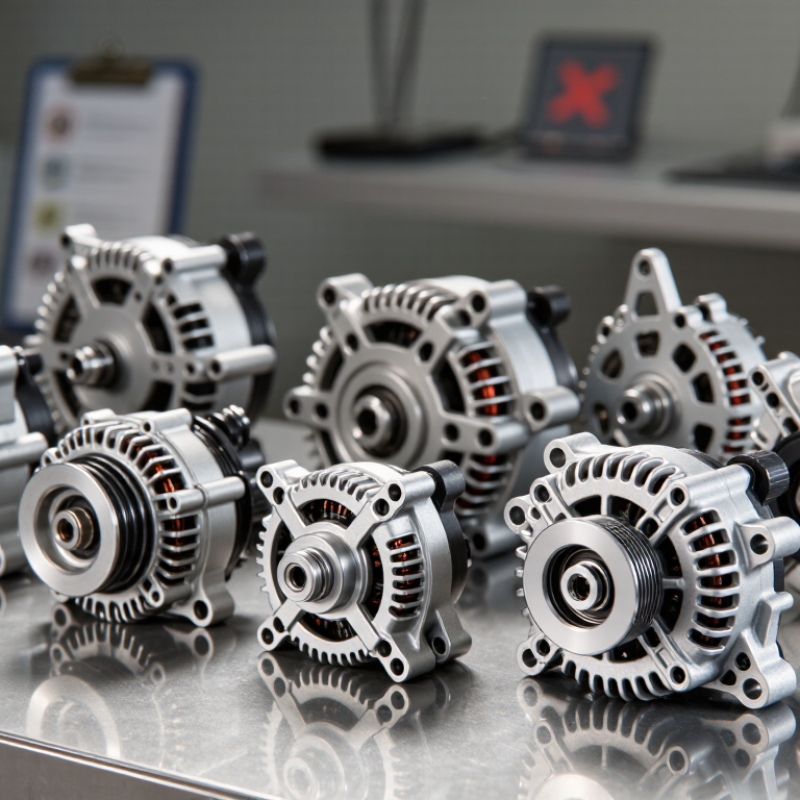
Understand the Alternator’s Function and Main Types
An alternator converts the engine’s mechanical energy into electrical power. It charges the battery while supporting lights, sensors, climate controls, and other vehicle systems. It is not a battery. The battery stores energy for starting, while the alternator produces energy after the engine runs.
Conventional Alternators Most passenger vehicles use conventional alternators with internal voltage regulators. These units provide steady output under normal electrical loads.
High-Output Alternators High-output alternators produce more current for vehicles with extra lighting, audio equipment, or commercial accessories.
Smart Alternators Smart alternators adjust charging voltage through the vehicle’s control system. They can improve fuel efficiency, but compatibility requires careful checking. A replacement may look identical yet communicate differently with the vehicle.
During inspections, I check the pulley design, mounting points, connector shape, rated amperage, and rotation direction. Heat matters. A unit tested in a cool workshop may perform differently in a crowded engine bay.
I once focused too heavily on rated output and overlooked the connector pin layout. That mistake caused unnecessary installation delays.
Output ratings also need context, because maximum current may occur only at a specific engine speed. Buyers should compare test conditions, operating voltage, bearing quality, and warranty terms. Regional vehicle specifications can vary, even within the same model year. When uncertain, verify the original part number and charging system requirements with a qualified technician.
