
China Top 10 Changeover Switch Manufacturers for Global Buyers
Choosing a reliable Changeover Switch manufacturer requires more than comparing prices, product photos, and factory claims. Global buyers must examine switching performance, enclosure quality, contact materials, testing procedures, and after-sales support. A switch may look strong on a clean catalog page. Its real character appears during a power failure, when a generator starts, contacts move, and every second matters.
Electrical safety expert Mike Holt often reminds professionals, “Safety is not expensive; accidents are.” This principle fits every Changeover Switch purchase. Buyers should check rated current, voltage, pole configuration, manual or automatic operation, short-circuit withstand, and compliance with relevant IEC standards. Factory audits, sample testing, and traceable inspection records also deserve attention. Small details matter. A loose terminal can become a serious weakness.
This guide reviews China’s top ten Changeover Switch manufacturers for international buyers. It considers manufacturing experience, engineering capability, export performance, certification transparency, customization, delivery reliability, and technical communication. Some companies excel in automatic transfer systems. Others focus on compact manual units, industrial panels, or cost-sensitive projects. No ranking is perfect. Market information changes, and supplier claims still require verification.
The strongest manufacturer is not always the cheapest. A dependable partner should answer technical questions clearly, provide complete documentation, and support the product after shipment. Buyers should also confirm local installation requirements before ordering. That step is sometimes overlooked. This overview offers a practical starting point, not a substitute for engineering judgment.
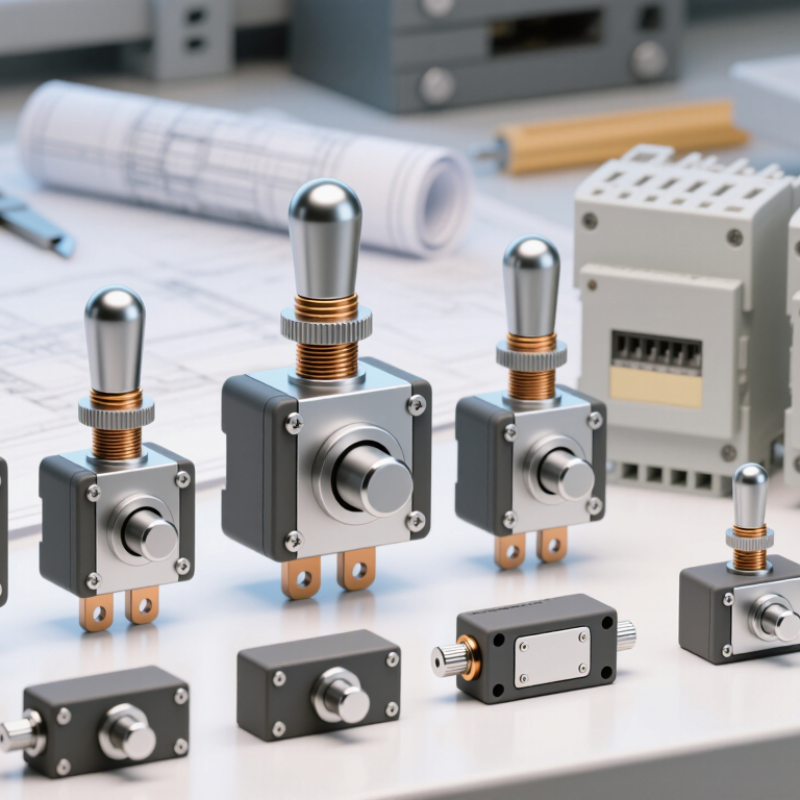
What Changeover Switches Do and Where They Are Used
A changeover switch transfers a load between two power sources, such as utility supply and a generator. It can operate manually or automatically through an automatic transfer switch controller. During a blackout, the mechanism isolates the failed source before connecting the backup source. This prevents dangerous back-feeding and reduces interruption time. IEC 60947-6-1 provides requirements for transfer switching equipment, including switching performance and safety design.
Demand for reliable power is rising. The IEA’s Electricity 2024 report forecasts global electricity demand growth of about 4% in 2024 and 2025. It also expects data centre electricity use to exceed 1,000 TWh by 2026. These figures explain why changeover switches appear in hospitals, server rooms, factories, telecom sites, commercial buildings, and residential backup systems. In a hospital, a transfer may protect surgical lighting. In a workshop, it can keep pumps and control panels running.
Details matter. Field inspections often check source interlocking, neutral switching, enclosure protection, and generator warm-up delays. A poorly selected rating can overheat during motor starting. A changeover switch is not a magic shield. The Uptime Institute’s Annual Outage Analysis 2024 continues to identify power problems as a major operational risk. Buyers should verify short-circuit capacity, switching category, pole configuration, installation environment, and local certification. Real sites are messier than catalogues suggest. A proper load survey remains essential.
