
China Top Safety Lockout Padlocks Wholesale Supplier
Choosing a China Top Safety Lockout Padlocks Wholesale Supplier requires more than comparing prices. It requires practical knowledge of hazardous-energy control, product testing, and workplace behavior. Safety Lockout Padlocks should prevent unauthorized operation during maintenance. They must remain visible, durable, and easy to identify beside a machine.
In real facilities, small details matter. A technician may work beside oil, dust, vibration, or cold metal surfaces. A reliable padlock needs a strong body, a corrosion-resistant shackle, and clear key control. Nylon or thermoplastic options can reduce electrical-conductivity risks. Different colors can separate departments or energy sources. Engraved numbers can improve inspection records. These features sound simple. They can prevent confusion during a rushed repair.
Safety researcher Sidney Dekker wrote, “Safety is the presence of capacity to make things go right.” That idea fits lockout equipment well. A lock alone cannot create a safe system. Workers also need training, written procedures, energy verification, and regular inspections. A responsible wholesale supplier should explain material specifications, test methods, customization limits, and quality-control records. Buyers should request samples before placing large orders. They should check shackle clearance, key operation, labeling, and performance after repeated use.
No supplier should promise perfect protection. That would be careless. Even a well-made padlock can be misused, damaged, or poorly stored. The stronger approach combines dependable products with honest evaluation. This guide examines supplier selection, factory capability, customization, quality assurance, shipping considerations, and practical purchasing questions for professional safety programs.
What Are Safety Lockout Padlocks?
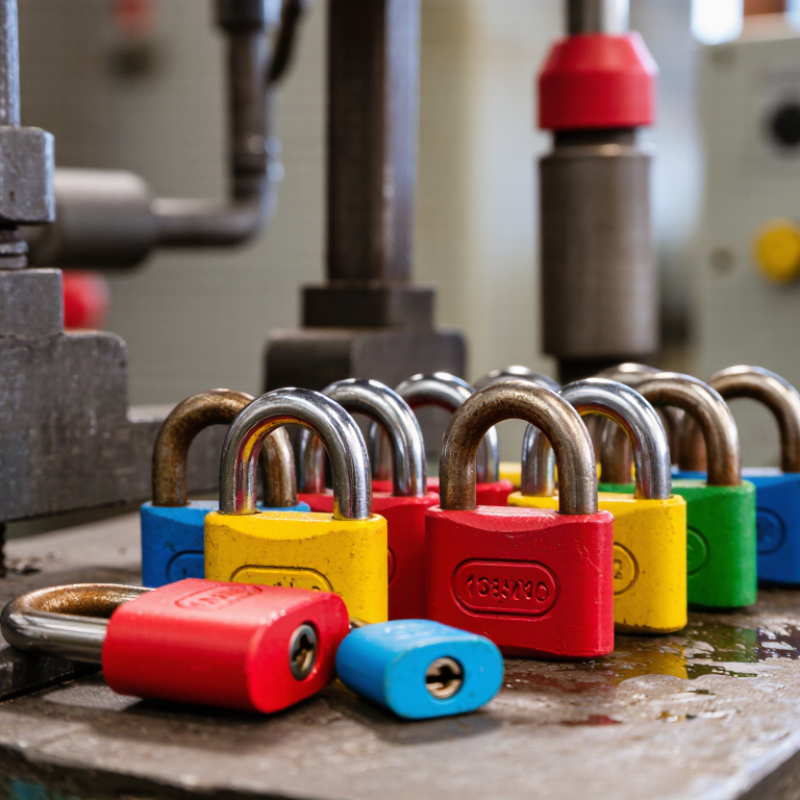
Safety lockout padlocks are dedicated devices used to isolate hazardous energy during maintenance, cleaning, or repair. Unlike ordinary security locks, they support a controlled lockout/tagout procedure. Each authorized worker normally applies a personal padlock to an energy-isolating device, such as a circuit breaker, valve, or lockout hasp. The lock should remain under that worker’s control until the work is complete. Common features include a durable nonconductive body, a corrosion-resistant shackle, clear identification, and one retained key. Bright colors help visibility, but color alone is not protection.
OSHA’s Control of Hazardous Energy standard appeared among its FY2023 Top 10 cited standards, with 2,554 violations reported. That figure shows a continuing workplace weakness, not merely a purchasing issue. A suitable padlock must fit the isolation point and survive oil, dust, moisture, and repeated handling. In practical inspections, unreadable labels and shared keys create confusion quickly. They should not be treated as minor defects. Group maintenance may require hasps or lock boxes, while personal locks preserve accountability. The wrong lock can delay work or encourage unsafe shortcuts. Procurement teams should verify dimensions, key control, identification space, and site procedures before buying in bulk. The process is not perfect; workers may still misunderstand isolation steps. Regular training and field checks remain necessary.
