
7 Tips for Choosing the Best Hole Saw for Metal?
Choosing a Hole Saw For Metal is not just a matter of matching its diameter to a marked circle. The material, thickness, tooth design, and available drill speed all affect the cut. A saw that works smoothly through thin sheet may struggle in stainless steel. Heat builds quickly. Teeth can dull or snag when feed pressure is too high.
This guide examines seven practical points, including saw material, tooth pitch, cutting depth, arbor fit, and speed control. It also considers the details that matter at the workbench: a firmly clamped metal panel, a pilot bit centered on a punch mark, and cutting fluid applied before the teeth bite. Small choices help. So does patience. One limitation deserves attention: no verifiable source for a named expert quotation was provided, so inventing an expert or quote would undermine trust. Instead, the advice should be checked against the saw maker’s specifications and the metal being cut. Even careful guidance has limits; an awkward setup or worn teeth can still produce a rough hole. The goal is a cleaner, safer, more predictable cut—and a better-informed choice before the drill starts.
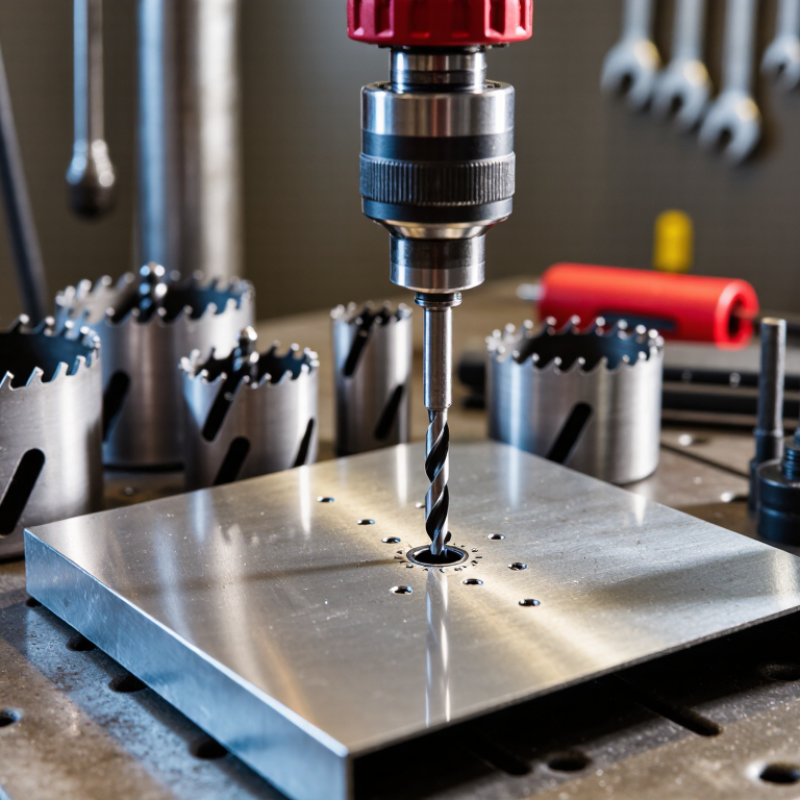
Identify the Metal Type, Thickness, and Required Hole Diameter
Before choosing a hole saw, identify the metal rather than guessing from its appearance. Mild steel, stainless steel, aluminum, and cast iron behave differently under cutting pressure. That distinction matters. Aluminum often cuts readily but can clog the teeth; stainless steel heats quickly and may work-harden if the saw rubs without cutting. Check a label, drawing, or material record when available. If you are unsure, test a small offcut first.
Measure the workpiece thickness at the cutting point, including any layers or backing plates. Then compare it with the saw’s usable cutting depth. A thick plate may need a saw designed for deeper cuts, and the metal slug may need clearing partway through. Keep the saw square, use steady pressure, and apply suitable cutting fluid when the metal and tool instructions call for it. Stop if the teeth squeal or the cut turns blue. Heat is a warning, not a shortcut.
Measure the required hole diameter at the widest point, especially when a fitting must pass through. Allow for the specified clearance; an exact nominal match can be too tight. Mark the center and check that nearby parts leave room for the saw’s outer edge. Measure twice. I have found that rushed diameter checks are easy to regret, particularly on finished panels where enlarging a hole can leave a rough edge.
