
How to Choose Water Treatment Equipment in 2026?
Choosing Water Treatment Equipment in 2026 requires more than comparing prices and product photographs. Water sources are changing, energy costs remain uncertain, and treatment standards continue to develop. A reliable decision begins with evidence from the actual site, not a sales brochure.
Test the incoming water. Measure turbidity, hardness, pH, iron, microbial risks, and seasonal variation. A clear sample can still hide serious contamination. Record daily flow, peak demand, pressure, temperature, and available installation space. These details determine whether filtration, ultrafiltration, reverse osmosis, ultraviolet treatment, or combined systems are appropriate.
Small details matter.
In practical projects, clogged prefilters, noisy pumps, and poorly placed drains often create larger problems than expected. Equipment should be evaluated through verified performance data, maintenance access, replacement-part availability, and total operating cost. Ask suppliers for test results, warranty terms, certifications, and references from similar applications. Independent laboratory analysis can challenge optimistic claims.
No system fits every facility.
This guide examines how to match treatment technology with water quality, production needs, budget, and long-term reliability. It also considers energy consumption, chemical use, monitoring instruments, automation, and safe operator access. Some assumptions may prove wrong after installation, especially when water chemistry changes throughout the year. That is why pilot testing and scheduled reviews remain valuable. Expert advice helps, but transparent evidence matters more. The strongest choice is not always the most advanced system. It is the system that performs consistently, can be maintained responsibly, and protects users without creating avoidable environmental burdens.
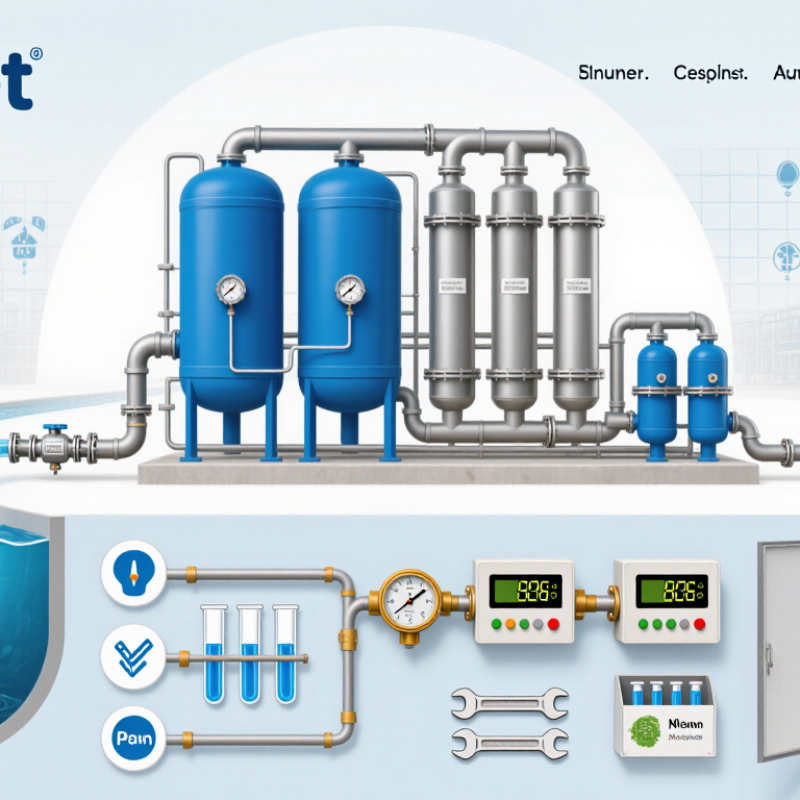
Set Water Targets: WHO Reports 2.2 Billion Lack Safely Managed Drinking Water
WHO reports that 2.2 billion people lack safely managed drinking water. That figure makes equipment selection a public health decision, not merely a technical purchase.
Start by setting measurable water targets. Test source water for bacteria, turbidity, iron, hardness, salinity, and chemical pollutants. Record seasonal changes too. A clear sample can still contain invisible hazards. Define acceptable limits, daily demand, pressure, maintenance capacity, and operator skills before choosing equipment.
Match treatment stages to the evidence. Sediment filters can reduce visible particles. Disinfection can control microorganisms. Membranes may address dissolved salts, but they create concentrated wastewater. That detail is often overlooked. In a rural facility, simple systems may perform better than complex units without spare parts or trained operators. In a busy building, automatic monitoring may justify higher costs. I would not trust a supplier’s test alone. Ask for independent laboratory results, operating data, cleaning requirements, and realistic replacement schedules. Targets may need revision after field testing. That is not failure; it is responsible design.
