
How to Choose an Aluminum Frame Sun Room in 2026?
Choosing an Aluminum Frame Sun Room in 2026 requires more than comparing attractive photos and package prices. The right model should balance daylight, thermal comfort, structural strength, ventilation, drainage, and long-term maintenance. A bright room can become unbearably hot if its glass, roof design, and shading system are poorly matched.
Building-science expert Dr. Joseph Lstiburek often emphasizes, “Water is the enemy.” That warning matters here. Inspect the roof junctions, frame corners, gutters, and sill drainage before considering decorative details. A reliable Aluminum Frame Sun Room should include thermally broken aluminum profiles, low-emissivity glazing, sealed connections, and a roof system suited to local weather. Check published U-values, solar heat gain coefficients, wind ratings, and warranty conditions. Marketing language alone is not enough.
Real experience also exposes uncomfortable compromises. Larger glass panels create wider views, but they may increase heat gain and replacement costs. Thicker insulation can improve comfort, yet it may reduce the slim appearance many homeowners want. Even advanced coatings cannot correct poor installation. I have seen beautiful sunrooms fail because installers ignored condensation paths and roof runoff. That lesson is easy to overlook.
This 2026 guide explains how to compare frame alloys, glass packages, roof options, ventilation methods, and installation quality. It also considers seasonal use, cleaning access, furniture protection, and future repairs. No single design suits every home. The best choice is the one that performs quietly, handles real weather, and still feels comfortable on a cold morning.
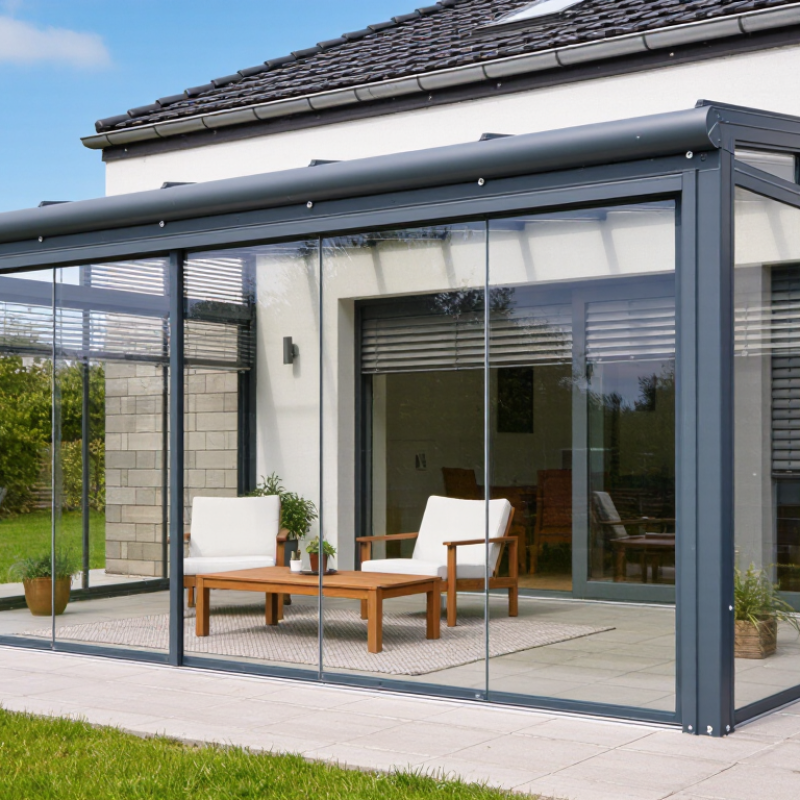
What Is an Aluminum Frame Sun Room?
An aluminum frame sun room is a glazed extension attached to a home. It usually combines aluminum roof and wall sections with glass panels, doors, seals, gutters, and a supporting base. The aluminum carries structural loads while admitting daylight through large openings. A thermal break separates the inner and outer metal surfaces, reducing heat transfer. Without one, the frame can feel cold in winter and hot in summer.
The U.S. Department of Energy reports that windows can cause 25–30% of residential heating and cooling energy use. That figure makes glass and frame performance important. A suitable 2026 design should include low-emissivity glazing, insulated roof panels, reliable drainage, and tested air seals. The International Energy Agency also identifies buildings as responsible for about 30% of global final energy demand. A sun room should not become an unplanned heat box.
Look closely at the details.
On real installations, frame color affects surface temperature, especially under strong sunlight. Dark finishes may need better ventilation and shading. Ask for U-values, solar heat-gain data, wind-load testing, and warranty terms. Do not judge quality by appearance alone. A beautiful frame with weak seals will disappoint. Even careful specifications can miss local weather conditions, which is why a site assessment remains necessary.
