How to Choose the Right Steel Chisel?
Choosing the right steel chisel begins with understanding the work, not chasing the hardest steel. A framing chisel, bench chisel, and cold chisel serve very different purposes. Their shapes, edge angles, handles, and steel grades reflect those demands. A tool designed for striking timber may fail quickly against masonry. The wrong choice can also damage the workpiece, your hands, or the chisel itself.
Woodworking educator Paul Sellers often stresses a practical principle: “A sharp chisel is a safe chisel.” That idea remains useful when comparing tools. A well-ground edge cuts cleanly and requires less force. Look for a comfortable handle, a secure blade connection, and a polished cutting edge. For repeated hammering, choose a reinforced striking end. For delicate joinery, prioritize balance and edge control. Small details matter, especially when your palm is damp or the bench is crowded.
Steel quality deserves careful attention. Carbon steel can sharpen easily and provide excellent feedback. Chrome-vanadium steel may offer stronger wear resistance for demanding work. Yet steel alone does not guarantee performance. Heat treatment, grinding accuracy, and quality control often matter more than impressive packaging claims. I have seen inexpensive chisels perform well after careful honing, while costly models disappointed under rough use. That is worth remembering.
A useful buying decision should consider task, frequency, maintenance, and budget together. Check the edge straightness under bright light. Test the handle for movement. Ask whether replacement parts are available. There is no perfect Steel Chisel for every job. The best choice is the one that matches your material, technique, and willingness to maintain it. Expect a little trial and error. That is part of learning.
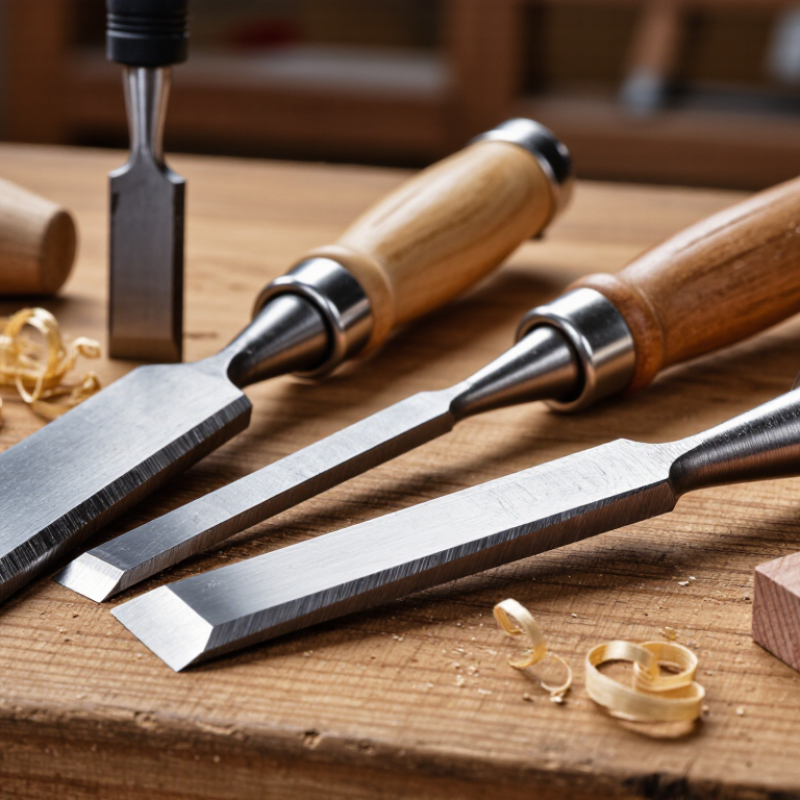
Understanding Steel Chisel Types and Their Intended Uses
How to Choose the Right Steel Chisel?
Understanding steel chisel types starts with the material being cut. A cold chisel has a flat, sharpened edge for cutting mild steel, bolts, and masonry joints. A cape chisel creates narrow grooves, while a round-nose chisel forms channels or removes metal from tight spaces. Brick chisels usually have wider blades for controlled masonry cuts. Wood chisels are different. Their thinner edges are designed for timber, not metal.
Match the blade to the task.
The World Steel Association reported 1.89 billion tonnes of crude steel production in 2023. That scale reflects steel’s importance, but it does not make every steel chisel suitable for hardened work. Check the manufacturer’s hardness range, edge geometry, and heat-treatment information. ASTM and ISO tool standards also emphasize dimensional consistency and safe striking surfaces. A mushroomed head is a warning sign. Replace it, or dress it carefully with proper protection.
In workshop use, I choose a shorter chisel when control matters and a longer one when reach is necessary. A broad blade can spread force across masonry, but it may feel clumsy in a narrow groove. I once selected a general-purpose cold chisel for a hardened fastener. It barely marked the surface and damaged the edge. That mistake was avoidable. Select by material hardness, cut width, striking method, and working angle. Wear eye protection. Keep hands behind the impact line. Small details matter.
Matching Chisel Material and Hardness to the Workpiece
Choosing the right steel chisel starts with the workpiece, not the tool’s appearance. A chisel’s steel must balance hardness, toughness, and resistance to deformation. For mild steel, a medium-hard alloy tool steel usually holds a sharp edge without becoming dangerously brittle. For softer brass or aluminum, choose a keen edge with moderate hardness. Excessive hardness can cause chipping during a glancing strike.
Fit matters. When cutting mild steel, the edge should be harder than the surface but tough enough to absorb repeated blows. A cutting edge around 50–58 HRC is common, though the correct range depends on geometry and heat treatment. The striking head should remain softer than the cutting end. This helps reduce mushrooming and unexpected fragments.
Hardness alone misleads. I have seen a very hard chisel lose its corner after one careless impact on a hardened fastener. For hardened steel, use a purpose-designed tool with a stronger alloy and carefully controlled heat treatment. Do not force a standard cold chisel into that job. For masonry or highly abrasive surfaces, a carbide-tipped tool may be more suitable than plain steel. Test the chisel on scrap first, checking for edge rolling, small chips, or visible cracks. A supplier’s hardness certificate improves confidence, but actual edge performance still deserves inspection. Safety glasses and controlled hammer strikes remain essential.
How to Choose the Right Steel Chisel?
Matching chisel material and hardness to the workpiece
The ranges below are representative engineering values. Workpiece hardness varies by alloy, heat treatment, and condition. A harder edge is not always better: excessive hardness can increase chipping during impact.
| Workpiece | Suitable Chisel Material | Recommended Edge Hardness | Selection Guidance |
| Aluminum alloys | Carbon tool steel or chromium-vanadium steel | 45–50 HRC | Use a sharp, moderately hard edge to reduce deformation and edge damage. |
| Copper alloys | Carbon tool steel or chromium-vanadium steel | 45–52 HRC | A tough edge is preferred because the workpiece is relatively soft and ductile. |
| Mild steel | Carbon tool steel or chromium-vanadium steel | 52–58 HRC | This is the common range for general cold-chiseling applications. |
| Gray cast iron | Tough chromium-vanadium steel | 54–58 HRC | Choose toughness as well as hardness because cast iron is hard and brittle. |
| Hardened steel | High-speed steel or carbide-tipped tooling | 60–64 HRC | Do not use a conventional impact chisel unless it is specifically rated for hardened steel. |
Evaluating Maintenance Needs and Choosing the Best Value Option
Choosing a steel chisel should begin with maintenance, not the lowest purchase price. Inspect the edge after every demanding job. Look for mushrooming, chips, deep rust, and a bent shank. Measure the real workload. That matters.
The U.S. Department of Energy’s Operations & Maintenance Best Practices Guide reports that operation and maintenance can represent 60–75% of an asset’s life-cycle cost. A chisel with poor hardness may need frequent dressing or replacement. Its low price then becomes misleading. Select a grade suited to the task, with a properly tempered striking end and a stable cutting edge. ASTM A681/A681M provides useful guidance for tool-steel selection, but the standard does not replace practical testing. A chisel for masonry should not be judged like one for cold metal.
In the workshop, record how many cuts each chisel completes before sharpening. Check edge wear under direct light, and keep the tool dry after cleaning. Replace any tool with a flared head or visible cracking. Safety is part of value. NIOSH investigations consistently identify flying fragments and poor tool condition as preventable struck-by hazards. My own shortcut was wrong: I once judged value by purchase price alone. A better comparison includes downtime, sharpening labor, safe handling, and expected service life. The cheapest option can still win, but only after those costs are measured.