How to Choose a Transformer Production Line?
Choosing a Transformer Production Line is a practical decision with long-term consequences. It affects product quality, operating costs, worker safety, and delivery performance. A line that looks impressive in a showroom may perform differently in a real factory. Dust, humidity, unstable power, limited floor space, and changing order sizes can expose hidden weaknesses.
Experienced manufacturers usually begin with the transformer types, voltage ranges, core dimensions, and expected annual output. These details guide decisions about winding machines, core cutting systems, insulation equipment, drying ovens, assembly stations, and testing instruments. Production speed matters, but consistency matters more. A winding machine that produces uneven tension can create costly defects later. Small errors become expensive.
Ask practical questions.
Can operators maintain the equipment without waiting weeks for overseas technicians? Are replacement parts available locally? Does the supplier provide installation training, process documentation, and reliable after-sales support? Independent test reports, factory references, and performance records deserve careful review. Claims alone are not enough.
A reliable evaluation should include a factory visit, sample production, energy consumption data, noise levels, and a realistic maintenance schedule. Buyers should also compare automation with actual labor skills. Full automation may appear efficient, yet it can be unsuitable for smaller batches or frequent design changes. I have seen projects focus heavily on output capacity while underestimating commissioning time. That mistake can delay production for months.
The best Transformer Production Line is not always the fastest or most expensive. It should match technical requirements, workforce capability, quality targets, and future expansion plans. Leave room for honest uncertainty. A thoughtful decision protects investment and supports stable production.
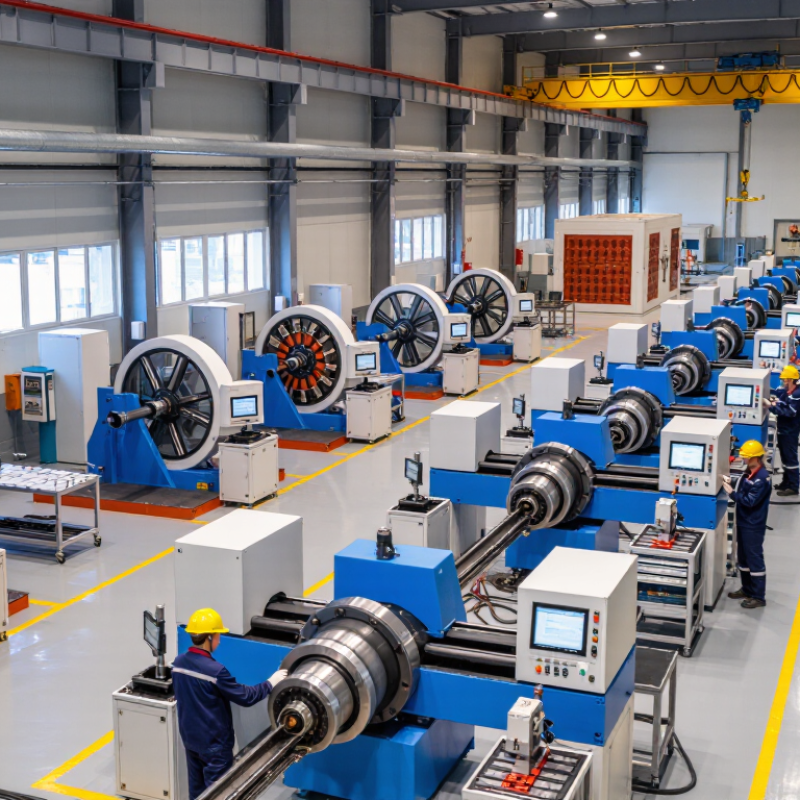
Define Transformer Type, Rating, and Frequency Under IEC 60076
How to Choose a Transformer Production Line?
Define Transformer Type, Rating, and Frequency Under IEC 60076
Choosing a transformer production line starts with a precise product definition. IEC 60076 provides the technical framework for power transformers, including insulation, temperature rise, tests, and performance requirements. Identify the transformer type before discussing machinery. It may be oil-immersed or dry-type, single-phase or three-phase, and designed for distribution or power service. Each choice affects winding equipment, drying systems, assembly space, and testing capacity.
The rating must describe more than a single MVA value. Record rated power, high- and low-voltage levels, connection symbol, impedance, insulation level, cooling method, and permitted temperature rise. For example, a 10 MVA transformer rated at 33/11 kV needs different production controls from a smaller 400 kVA unit. Frequency is equally important. State 50 Hz or 60 Hz clearly, because frequency influences core design, flux density, losses, and verification tests. A vague frequency assumption can create expensive rework.
Tips: Prepare a product data sheet before selecting machines. Check the applicable IEC 60076 parts with a qualified engineer. Confirm local grid conditions and customer specifications. Leave room for variation in future orders. A first specification is rarely perfect. In design reviews, teams sometimes focus on capacity and overlook testing requirements. That mistake can distort the entire line layout. Validate the production sequence against real transformer dimensions, not only catalog estimates.
Compare Automation Levels Using Cycle Time, OEE, and Labor Requirements
How to Choose a Transformer Production Line?
Compare Automation Levels Using Cycle Time, OEE, and Labor Requirements
Choosing a transformer production line requires more than comparing machine speeds. Cycle time shows how long one unit takes under defined conditions. Measure loading, winding, assembly, testing, and changeovers separately. A quoted cycle time may exclude material handling or inspection. Small delays accumulate.
OEE provides a more realistic view. It combines availability, performance, and quality. Record unplanned stops, reduced speeds, and rejected units during representative production runs. An automated line may produce one transformer every few minutes, yet frequent sensor faults can reduce availability. Manual lines can appear slower, but skilled workers may recover from product variations more quickly. The comparison must use the same product mix and shift length.
Labor requirements also change with automation level. Count operators, material handlers, inspectors, technicians, and supervisors. Semi-automated equipment may need more hands-on work, but it can simplify maintenance and changeovers. Highly automated equipment often reduces direct labor while increasing programming and troubleshooting demands. Training time matters. So does ergonomic risk.
Use measured data rather than sales estimates. Pilot testing helps. My experience suggests that early calculations often overlook rework and waiting time. That is worth challenging. A line with excellent theoretical speed may perform poorly when copper sizes, insulation designs, or order quantities change. Leave practical space for maintenance access, operator movement, and future product adjustments.
Select Line Capacity, Quality Controls, and ISO 9001 Traceability Features
How to Choose a Transformer Production Line?
A suitable transformer production line should match output volume, product range, and inspection discipline. Capacity is not only a daily unit number. It also includes core cutting speed, winding stations, drying time, assembly space, and testing queues. The U.S. Department of Energy reported that about 70% of distribution transformers were at least 25 years old. This aging infrastructure increases demand for dependable replacement equipment and consistent production quality.
Quality controls must be visible at each critical stage. A line should record conductor dimensions, winding tension, insulation materials, torque values, vacuum pressure, and oil test results. Factory acceptance tests should cover ratio, resistance, losses, insulation strength, and partial discharge where required. ISO Survey 2023 recorded more than 1.2 million ISO 9001 certificates worldwide. Certification alone proves little, however. A rushed checklist can still hide a weak process.
Tips: Ask for sample production records, not only brochures. Check whether each serial number links to material batches, operators, calibration dates, test results, and approved corrections. Use barcode scanning at winding and assembly stations. Keep electronic records with controlled access. A paper backup is useful, but paper systems are easy to misplace. During a factory visit, follow one transformer from steel receipt to final test. If operators cannot explain a failed result, stop and investigate. Capacity claims deserve skepticism. Wider production lines may create more defects when training and inspection lag behind.