147 Mill Ridge Rd Suite 232
Lynchburg, Virginia 24502
Phone 757-982-3665

Top Vertical Wheelchair Lift Manufacturers Worldwide?

Selecting the top Vertical Wheelchair Lift manufacturers worldwide requires more than comparing catalog prices. Hospitals, schools, transport hubs, and private homes need dependable access between split levels. The lift must fit a narrow landing, carry a powered wheelchair, and stop smoothly beside a doorway. Small details matter.

The World Health Organization’s Global Report on Health Equity for Persons with Disabilities (2022) estimates that 1.3 billion people experience significant disability worldwide. Its findings highlight persistent barriers in buildings, transport, and public services. The United Nations Disability and Development Report 2024 also identifies accessibility as a continuing development challenge. These reports show why vertical access equipment is not a niche purchase. It supports independence, safer movement, and broader participation.

This guide compares leading manufacturers through practical criteria: platform capacity, travel height, weather resistance, emergency lowering, installation support, and documented compliance. Standards such as ASME A18.1 and EN 81-41 can help buyers assess design and safety claims, although regional requirements differ. Industry research, including the Wheelchair Lifts Global Market Report 2024 by The Business Research Company, points to aging populations, home modifications, and public accessibility projects as major demand drivers. Market forecasts vary, and some published estimates use different product definitions. That deserves caution.

A polished brochure is not proof of field reliability. Installer training, spare-part availability, maintenance response, and user feedback often reveal more. The strongest manufacturers combine engineering depth with measurable service performance. Still, no global ranking remains perfect. Local climate, building codes, and long-term support can change the best choice.
Top Vertical Wheelchair Lift Manufacturers Worldwide?

What Is a Vertical Wheelchair Lift and How Does It Work?

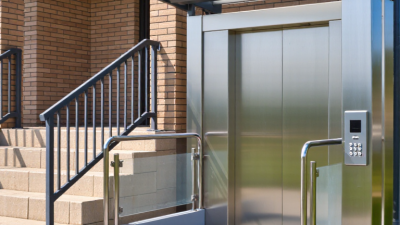
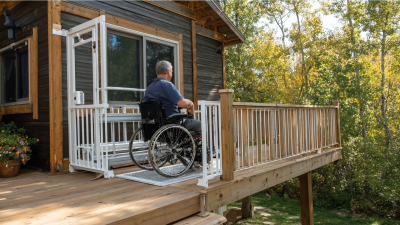
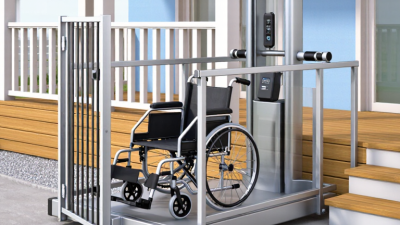
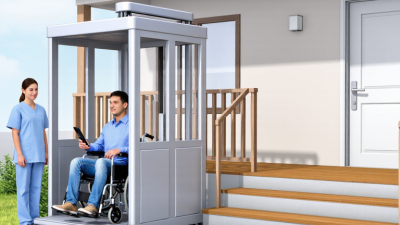
A vertical wheelchair lift moves a person and wheelchair between two levels without requiring a ramp. It uses a level platform, vertical guide rails, and a powered lifting system. The platform may rise through a shaft or beside a building entrance. Unlike a stair lift, it supports the entire wheelchair.

Most units use hydraulic pressure, a screw drive, or an electric motor with lifting belts. When the user presses a control, the motor raises or lowers the platform along fixed rails. Safety gates, edge barriers, emergency lowering, and obstruction sensors help prevent unsafe movement. Controls are commonly installed on the platform and at each landing. Clear audio or visual signals can assist users with limited vision or hearing.

During site assessments, installers check floor strength, travel height, drainage, weather exposure, and available turning space. A lift that fits on paper may still feel cramped at the upper landing. That detail is often missed. Reliable manufacturers provide load testing, maintenance guidance, replacement parts, and trained service support. Buyers should verify applicable accessibility, electrical, and building requirements before ordering. Outdoor models need sealed controls and corrosion-resistant finishes, but no enclosure remains maintenance-free. Dust, moisture, and worn seals can affect performance. Regular inspections should test brakes, sensors, gates, and emergency systems. A qualified technician should handle adjustments and repairs.

Key Standards for Evaluating Global Lift Manufacturers

Choosing a top vertical wheelchair lift manufacturer starts with evidence, not polished brochures. The WHO and UNICEF Global Report on Assistive Technology (2022) estimates that more than 2.5 billion people need assistive products. Demand is growing. This makes safety, maintainability, and inclusive design commercial necessities, not optional features. Buyers should request test certificates, load calculations, emergency procedures, and documented conformity for each destination market. A global supplier must explain differences between EN 81-41, ISO 9386-1, and ASME A18.1.

Technical review should examine rated load, platform dimensions, travel height, guarding, anti-crush protection, battery backup, weather resistance, and manual lowering. Independent testing matters more than a self-written performance sheet. Ask for failure rates, corrective-action records, and spare-parts availability over five to ten years. The 2022 WHO report also notes major unmet needs and affordability barriers. Lifecycle cost therefore deserves equal attention. A low purchase price can hide frequent service visits.

On-site experience often exposes weak points: narrow approach space, poor drainage, slippery controls, or unclear alarms. Evaluate installation training, local technicians, response times, and accessible manuals. Check whether maintenance data are traceable. No checklist is perfect. Even a compliant lift may feel unsafe if users cannot operate it confidently. A practical audit should include wheelchair users, caregivers, installers, and building inspectors before final selection. Claims should be measurable, current, and independently verifiable.

Leading Vertical Wheelchair Lift Manufacturers by Market Region

Vertical wheelchair lift manufacturers vary significantly by market region. In North America, leading manufacturers often focus on residential entrances, public buildings, and harsh outdoor conditions. Their designs commonly include weather-resistant platforms, backup lowering systems, and clear safety controls. Local service networks also matter, especially when a lift serves a busy clinic or apartment entrance. Installation experience has taught contractors one lesson: a strong motor cannot compensate for poor drainage or an inaccurate site survey.

European manufacturers often emphasize compact construction, energy efficiency, and integration with older buildings. Space can be limited near historic doorways, so manufacturers develop narrow platforms and customized railings. Compliance documentation is usually detailed, covering emergency operation, load capacity, guarding, and routine inspection procedures. Buyers should examine service response times, not only technical specifications. A polished brochure is not enough.

In Asia-Pacific, manufacturing strength often comes from scalable production and flexible customization. Suppliers may offer lifts for schools, transit facilities, private homes, and uneven exterior sites. Coastal projects need corrosion-resistant materials, while tropical regions require careful protection against humidity and heavy rain. In the Middle East, Africa, and Latin America, durability and spare-parts availability can outweigh advanced digital features. Remote locations expose a common weakness: some suppliers promise quick support without maintaining local technicians. That claim deserves verification. A practical comparison should include factory quality controls, installer training, warranty terms, accessibility testing, and long-term maintenance costs. Regional expertise helps, but it is never perfect.

Top Vertical Wheelchair Lift Manufacturers Worldwide: Market Context by Region

This chart compares the estimated population aged 65 and above across major global regions, a key demand indicator for vertical wheelchair lifts and other accessibility solutions. Figures are rounded regional estimates based on the World Bank population indicator SP.POP.65UP.TO for 2023; they represent market context rather than individual manufacturer sales.

How Vertical Wheelchair Lift Models Compare in Safety and Performance

Top Vertical Wheelchair Lift Manufacturers Worldwide?
How Vertical Wheelchair Lift Models Compare in Safety and Performance

Comparing vertical wheelchair lifts requires more than checking platform size or travel height. In practical inspections, I look for smooth starts, stable stopping, and controls that remain understandable under stress. A reliable model uses platform gates, non-slip flooring, obstruction sensors, and interlocks that prevent movement when access points are open. Emergency lowering should work during a power failure. It should also be reachable without forcing the user into a dangerous position.

Performance varies with installation conditions. A lift designed for a short indoor rise may feel quick and quiet. Outdoor models usually need stronger weather protection, drainage, and corrosion-resistant components. Battery backup can improve access during outages, but batteries require regular testing and replacement. A higher weight rating does not automatically mean better performance. The supporting structure, drive system, and stopping accuracy must work together.

Small details matter.

During daily use, excessive vibration may suggest poor alignment, uneven loading, or delayed maintenance. Some platforms offer faster travel, yet greater speed can reduce user confidence, especially for people with limited balance. Other models run quietly but require more installation space. This is where comparisons become less certain: published specifications cannot show every real-world difficulty. Buyers should review maintenance access, technician training, noise levels, and local accessibility requirements before choosing a lift. A thoughtful trial with the intended user may reveal problems that a showroom demonstration misses.

Top Vertical Wheelchair Lift Manufacturers Worldwide? - How Vertical Wheelchair Lift Models Compare in Safety and Performance

Vertical Lift Model Category Typical Rated Load Typical Travel Range Typical Speed Drive and Power Options Key Safety Features Weather and Installation Suitability Performance Profile Best-Fit Application
Open Vertical Platform Lift 340–450 kg
(750–1,000 lb)
Approximately 1–4.3 m
(3–14 ft), depending on configuration
Approximately 0.05–0.10 m/s
(10–20 ft/min)
Electric motor with screw-drive or hydraulic system; commonly uses single-phase power Platform safety gate, interlocked landing gates, emergency stop, overspeed protection, obstruction sensors, manual lowering, non-skid platform surface Suitable for indoor or outdoor use when the enclosure, drainage, corrosion protection, and electrical equipment are correctly specified High accessibility and good operating efficiency Homes, public entrances, schools, churches, and short-rise access points
Enclosed Vertical Platform Lift 340–450 kg
(750–1,000 lb)
Approximately 1–8.5 m
(3–28 ft), subject to local regulations and design
Approximately 0.05–0.10 m/s
(10–20 ft/min)
Electric screw-drive, chain-drive, or hydraulic configuration; dedicated power circuit may be required Full-height enclosure, door and gate interlocks, emergency alarm, battery lowering or emergency descent, overspeed control, platform obstruction detection Appropriate for frequent indoor or outdoor service; enclosure provides additional protection from wind and rain Very good safety protection and stable ride quality Multi-level entrances, commercial buildings, apartment buildings, and exposed outdoor locations
Commercial Heavy-Duty Vertical Platform Lift 450–635 kg
(1,000–1,400 lb)
Approximately 2–8.5 m
(6–28 ft), depending on the approved design
Approximately 0.05–0.10 m/s
(10–20 ft/min)
Heavy-duty electric or hydraulic drive; may require higher-capacity electrical service Redundant door interlocks, emergency communication or alarm, overload monitoring, anti-creep protection, overspeed governor, emergency lowering, fire and electrical safety provisions as required Best suited to engineered indoor or protected outdoor installations with planned maintenance access Highest capacity and strong durability under frequent use Transport hubs, healthcare facilities, government buildings, retail properties, and other high-traffic sites
Residential Compact Vertical Lift 340–365 kg
(750–800 lb)
Approximately 0.9–4.3 m
(3–14 ft)
Approximately 0.05–0.08 m/s
(10–15 ft/min)
Compact electric screw-drive or hydraulic system; commonly designed for residential electrical service Safety gate interlocks, emergency stop, obstruction sensing, manual emergency lowering, battery backup on selected configurations Suitable for homes and low-rise entrances; outdoor versions need weather-rated components and a suitable foundation Low space demand and economical operation Private homes, porches, decks, garages, and small changes in elevation
Through-Floor Vertical Lift 250–340 kg
(550–750 lb)
Approximately 2.4–4.3 m
(8–14 ft), typically between adjacent floors
Approximately 0.05–0.10 m/s
(10–20 ft/min)
Electric screw-drive or hydraulic system installed through a prepared floor opening Door interlocks, platform or cabin obstruction sensors, emergency lowering, battery backup on some systems, controlled start and stop Primarily intended for indoor residential use; requires structural assessment, floor preparation, and adequate headroom Space-efficient with a short direct route between floors Private residences where an external shaft or ramp is impractical
Low-Rise Vertical Platform Lift 340–450 kg
(750–1,000 lb)
Approximately 0.6–2.4 m
(2–8 ft)
Approximately 0.05–0.10 m/s
(10–20 ft/min)
Electric screw-drive or hydraulic system; often configured with a short platform travel distance Automatic ramp or threshold protection, platform gates, interlocks, emergency stop, obstruction detection, manual lowering Indoor or outdoor installation; foundation, drainage, and landing protection are important for outdoor use Fastest installation potential for small height changes Front steps, raised patios, entrances, stages, and small commercial platforms

Note: The figures shown are typical market ranges for vertical platform lift categories, not specifications for a particular manufacturer or brand. Actual load capacity, travel, speed, safety equipment, electrical requirements, and permitted installation height must be confirmed against the product documentation and the applicable local regulations and standards, such as ASME A18.1 or the relevant regional equivalent.

How to Choose the Right Manufacturer for Your Accessibility Needs

Choosing a leading vertical wheelchair lift manufacturer requires more than comparing glossy product pages. Start with the building, not the catalogue. Measure shaft height, landing space, door clearances, weather exposure, and daily traffic. The World Health Organization’s Global Report on Health Equity for Persons with Disabilities (2022) estimates that 1.3 billion people live with significant disabilities worldwide. Reliable access equipment is therefore a safety decision, not decoration.

Ask whether the manufacturer supports trained local installers and long-term maintenance. Request evidence for load ratings, emergency lowering, battery performance, weather protection, and entrapment prevention. Test the service network. Check documented compliance with relevant standards, such as ISO 9386-1 or EN 81-41, alongside local building requirements. A neat brochure is not proof. An honest supplier should explain warranty exclusions, spare-part availability, inspection schedules, and response times. These details often matter more than a low purchase price.

The United Nations Disability and Development Report (2018) identifies disability as affecting about 15% of the global population, reinforcing the need for dependable, inclusive design. Ask for references from buildings with similar traffic and climate conditions. Visit an installed lift if possible. Published market-size estimates vary widely, so I would not use them alone when ranking manufacturers. I would also examine whether the proposed platform feels stable, quiet, and simple to operate. The awkward questions matter. A manufacturer that welcomes them may be more reliable than one offering the cheapest quote.