
7 RFID Printer Buying Tips for Global Buyers
Buying an Rfid Printer for global operations is not a simple hardware decision. It affects labeling speed, inventory accuracy, encoding reliability, and long-term operating costs. A printer that performs well in a quiet office may struggle beside a busy warehouse dock, where dust, vibration, and changing label sizes are common.
Mark Roberti, founder of RFID Journal, has emphasized, “RFID is not a technology project; it is a business process project.” That perspective matters. Buyers should examine the complete workflow, not only print resolution or purchase price. The seven tips in this guide explore RFID compatibility, print quality, encoding performance, software integration, consumable costs, service support, and international deployment needs. Each factor can influence whether a printer produces dependable labels or expensive rework.
Small details matter. A roll may fit the printer but fail during high-speed encoding. A familiar software platform may require extra configuration. Regional service coverage may look acceptable on paper, yet replacement parts could take weeks to arrive. These risks deserve practical attention.
There is no perfect checklist. A model praised by one manufacturer may not suit another facility. Testing real labels, tags, adhesives, and data formats is wiser than trusting a brochure alone. Buyers should also question their own assumptions. The lowest upfront price can become costly through waste, downtime, and manual verification. A careful Rfid Printer evaluation connects technical specifications with daily work, measurable results, and realistic support expectations.
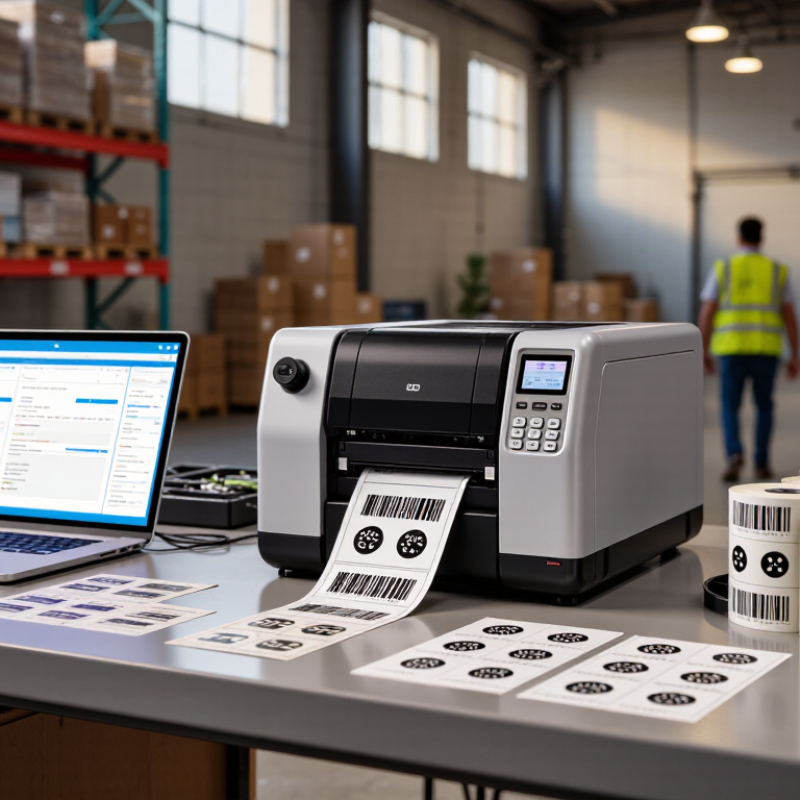
Define RFID Requirements: UHF 860–960 MHz, HF 13.56 MHz, and Read Range
7 RFID Printer Buying Tips for Global Buyers
Define RFID requirements before comparing printer prices.
UHF RFID typically operates between 860 and 960 MHz. However, permitted channels differ across regions. Confirm the target market’s frequency rules before ordering equipment.
UHF suits cartons, pallets, and dock-door identification. Its read range can reach several meters in open conditions. Real results often shrink near metal or liquids.
HF RFID operates at 13.56 MHz. It usually provides shorter reading distances and controlled, close-range interactions. This can suit documents, retail items, access cards, and small product tracking.
A printer must support the selected inlay design, not merely the frequency.
Test labels on the actual material, including glass bottles, foil packaging, or damp cardboard. A clean laboratory result may not survive a busy warehouse.
Read range is not a fixed specification. Tag orientation, antenna placement, printer encoding quality, and reader power all affect performance. Ask for measured results using your label stock.
Check failed-write rates during continuous printing. My first assumption was that longer range always improved productivity. It did not. Excessive range created unintended reads near adjacent pallets.
A practical pilot should measure successful encoding, label waste, and operator handling time. Also verify regional radio compliance and maintain traceable test records.
