
147 Mill Ridge Rd Suite 232
Lynchburg, Virginia 24502
Phone 757-982-3665

7 Tips for Choosing a Square Pipe Making Machine

Choosing a Square Pipe Making Machine is a major decision for any steel fabrication business. The machine affects product quality, production speed, energy use, and long-term operating costs. A suitable model should match your pipe dimensions, material grades, wall thicknesses, and expected output. Small details matter.

In practical factory evaluations, buyers often focus on advertised speed and overlook forming stability. A machine running quickly may still create uneven corners, surface marks, or frequent weld adjustments. The seven tips in this guide examine forming accuracy, welding performance, sizing control, automation, maintenance access, energy efficiency, and supplier support. Each area deserves attention before signing a purchase agreement.

Look closely at the production line, not only the main machine frame. Check how easily operators can change rollers, inspect the weld station, and remove finished pipes. Ask for test results using steel similar to your own material. A supplier should provide clear specifications, service terms, training details, and realistic delivery information. Independent references can reveal problems that brochures do not mention.

A polished presentation is not proof of dependable performance. That sounds simple. Yet many purchasing mistakes begin with incomplete comparisons. I have seen buyers underestimate tooling costs, spare-part lead times, and factory space requirements. A careful review may feel slower, but it reduces unexpected downtime later. The right Square Pipe Making Machine should support consistent production, safe operation, and measurable value rather than impressive claims alone. Some assumptions may still need testing, especially when special sizes or high-strength steel are involved.
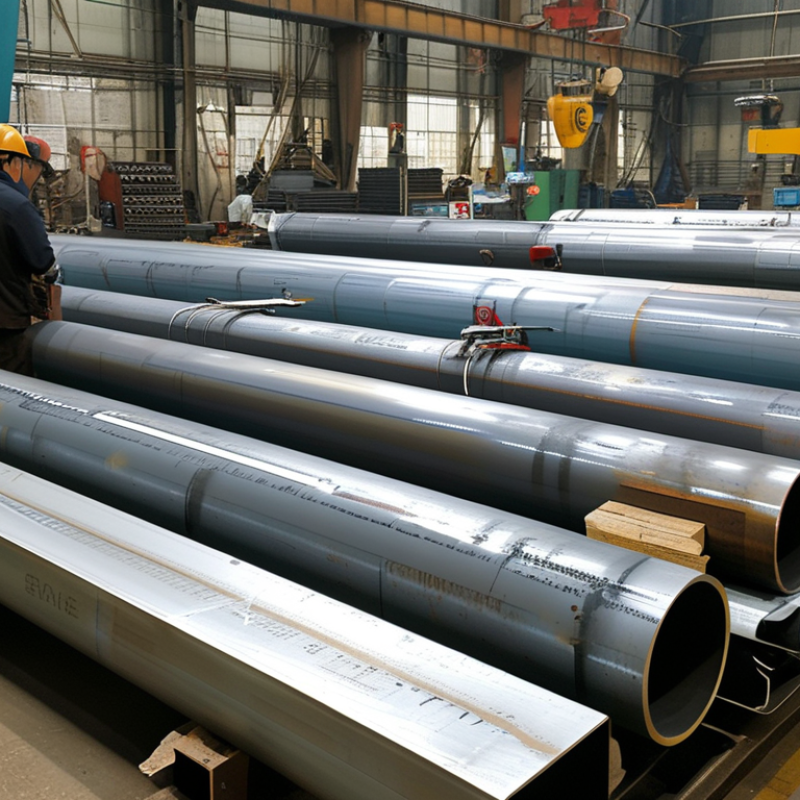
7 Tips for Choosing a Square Pipe Making Machine

Define Your Square Pipe Production Requirements

7 Tips for Choosing a Square Pipe Making Machine

Define Your Square Pipe Production Requirements

Before comparing machines, define the products you will actually manufacture. Record pipe sizes, wall thicknesses, steel grades, and required dimensional tolerances. Include both current orders and realistic future demand. A machine designed for 20–50 millimeter pipes may struggle with larger sections.

Measure twice.

Your production volume matters as much as pipe size. Estimate monthly tonnage, operating hours, changeover frequency, and acceptable scrap levels. A high-speed line is not automatically efficient if your orders change every hour. Frequent tooling adjustments can consume valuable production time.

Examine the complete process. Decide whether your line needs roll forming, high-frequency welding, sizing, cutting, and automatic bundling. Check coil width, maximum coil weight, line speed, and available floor space. Leave room for maintenance access, material handling, and safe operator movement.

Be precise about quality expectations. Ask how the machine controls straightness, corner shape, weld consistency, and cut length. Request practical test results using material similar to yours. A demonstration with thin, easy-to-form steel may not represent your daily production.

Do not overlook utilities. Verify electrical capacity, compressed air, cooling water, and ventilation requirements before installation. These details often cause delays. They are easy to underestimate.

Your assumptions may be wrong.

Speak with experienced operators and maintenance technicians before finalizing specifications. Their observations can reveal hidden setup problems, difficult tooling changes, or inconvenient control positions. A written requirement sheet keeps sales discussions focused and creates a reliable basis for evaluating machine performance.

Compare Machine Forming Methods and Production Capabilities

Choosing a square pipe making machine requires more than checking its advertised speed. The forming method directly affects accuracy, material use, and production flexibility. Direct forming shapes flat strip into a square profile through several roller stands. It usually supports efficient high-volume production and stable dimensions. However, tooling changes can take time when pipe sizes vary frequently.

Round-to-square forming begins with a welded round tube and reshapes it through sizing rolls. This method can simplify some production lines and provide smooth corners. Yet, excessive deformation may affect corner quality, especially with thicker steel. Press-based forming offers strong control for small batches and unusual dimensions. Its cycle time is slower, and labor requirements may increase.

Study the actual production range. Check compatible strip widths, wall thicknesses, pipe sizes, and motor capacity. Ask for measured output, not only theoretical speed. A line producing 60 meters per minute may slow significantly during cutting, welding, or size changes. Watch a trial run if possible. Look for consistent corner radii, clean welds, and limited surface marks.

Automation also matters. Automatic alignment and closed-loop control can reduce operator adjustment. Still, complicated systems may require specialized maintenance. A simpler machine can be more dependable in a small workshop. This is easy to overlook. Compare changeover time, tooling cost, spare-part access, and inspection records before choosing. One weak point can reduce the value of an otherwise capable line.

7 Tips for Choosing a Square Pipe Making Machine - Compare Machine Forming Methods and Production Capabilities

No. Selection Tip Forming Method Typical Production Capability Main Advantages Key Evaluation Points
1 Match the machine to the required pipe range Direct square forming or round-to-square forming Common tube sizes range from approximately 20 × 20 mm to 400 × 400 mm, depending on the line configuration and material thickness. A correctly sized mill provides more stable forming, lower tooling stress, and better dimensional control. Confirm minimum and maximum outside dimensions, wall thickness, steel grade, corner radius, and allowable size changeover time.
2 Choose the forming route according to product quality Direct forming shapes the strip closer to the final square profile; round-to-square forming first produces a round tube and then converts it to a square or rectangular section. Direct forming is commonly selected for medium-to-large structural sections; round-to-square lines are often suitable for flexible production of several hollow-section profiles. Direct forming can reduce forming passes and may improve corner consistency. Round-to-square forming can simplify certain production programs and tooling arrangements. Compare corner geometry, residual stress, straightness, weld-zone behavior, tooling cost, and the number of profiles required.
3 Set the required production speed realistically Continuous roll forming with high-frequency electrical resistance welding Typical line speeds are approximately 20–80 m/min for many carbon-steel square-tube applications; actual output depends on size, thickness, welding power, and cutting length. Continuous processing supports high output and consistent weld production when material supply and downstream equipment are properly balanced. Check whether the quoted speed is forming speed, welding speed, or maximum empty-line speed. Evaluate uptime, changeover losses, and scrap rate.
4 Verify material and thickness compatibility Carbon-steel strip processing with ERW welding; some machines can be configured for galvanized or stainless steel. Many general-purpose lines process carbon-steel strip from about 0.8–6.0 mm thick. Heavier sections normally require larger stands, stronger drives, and higher welding capacity. Correct material matching improves edge forming, weld penetration, dimensional accuracy, and service life of rolls and guides. Review yield strength, strip width, coil weight, surface coating, weldability, hardness, and the required heat-treatment or sizing process.
5 Assess dimensional accuracy and weld quality Roll forming, high-frequency welding, squeeze-roller control, sizing, and online inspection A suitable line should be capable of producing repeatable outside dimensions, controlled corner radii, straightness, and a continuous weld suitable for the applicable product standard. Stable guides, synchronized rolls, automatic weld control, and sizing stands help reduce dimensional variation and visible weld defects. Request sample inspection records for outside dimensions, wall thickness, squareness, twist, straightness, weld integrity, and cut-length tolerance.
6 Compare tooling flexibility and changeover requirements Interchangeable roll tooling, cassette tooling, or quick-change forming systems A line designed for multiple sizes may cover several square and rectangular profiles, but each additional size can require dedicated rolls, guides, spacers, or adjustment procedures. Flexible tooling can reduce setup time and make the machine more suitable for mixed orders and frequent size changes. Compare tooling quantity, roll material and hardness, adjustment method, stored recipes, changeover labor, and the availability of spare components.
7 Evaluate the complete production line, not only the forming mill Coil handling, strip accumulation, forming, ERW welding, sizing, cutting, inspection, and bundling A complete line may include an uncoiler, leveler, shear and end welder, accumulator, forming stands, welding unit, sizing section, flying saw, run-out table, and packing equipment. Balanced upstream and downstream equipment improves line utilization, finished-product handling, safety, and overall operating efficiency. Check electrical load, floor space, compressed air, cooling water, extraction, operator access, maintenance requirements, safety guarding, and automation integration.
Reference note: The capacity figures are typical engineering ranges for welded steel hollow-section production. Actual performance varies with tube dimensions, steel grade, wall thickness, coil quality, welding system, tooling design, cutting length, and operating conditions. Always validate specifications through a production trial and applicable product standards.

Evaluate Material Compatibility and Pipe Size Range

Choosing a square pipe making machine starts with the metal, not the machine’s polished appearance. Confirm whether it processes carbon steel, stainless steel, galvanized strip, or aluminum. Each material behaves differently during forming and welding. Check the permitted yield strength, thickness, width, and surface coating before requesting a quotation. A machine designed for mild steel may struggle with harder stainless strip. That mistake can create corner cracks, unstable welds, and excessive tool wear. Ask for trial production using your actual coils. Real samples reveal more than a brochure.

Pipe size range deserves equal attention. Write down your smallest and largest planned square dimensions. Then check wall thickness, corner radius, and line speed at both limits. A stated range may look impressive, yet performance can weaken near its edges. For example, a line may form 20-millimeter tubes smoothly but vibrate at 150 millimeters. Verify changeover time and tooling requirements. Frequent size changes need accessible rolls, repeatable settings, and clear calibration marks. Otherwise, production pauses become expensive.

I would also inspect the weld system, sizing section, and cooling arrangement. They must match the material and output target. Do not trust numbers alone. Request dimensional reports from test runs, including diagonal difference and corner squareness. Ask how operators correct springback after forming. This practical detail often separates dependable equipment from attractive promises. My checklist would include a tolerance review, although I might revise it after observing actual production conditions. That uncertainty is worth admitting. A machine can be technically suitable and still be inconvenient on the factory floor.

Check Machine Quality, Automation, and Operating Efficiency

7 Tips for Choosing a Square Pipe Making Machine

Check Machine Quality, Automation, and Operating Efficiency

Tip 1

Inspect the frame, forming stands, welding unit, and cutting system. Heavy steel construction reduces vibration during high-speed production. Measure the pipe seam and dimensions after trial runs. Do not trust polished brochures alone.

Tip 2

Request test samples using your actual steel grade and thickness. Check corner accuracy, weld consistency, surface marks, and cutting tolerance.

Tip 3

Review the control system carefully. Automatic strip alignment, recipe storage, fault alarms, and quick size changes can reduce operator errors. However, automation is not always better. Poorly configured sensors create expensive stoppages. Measure the seam.

The International Federation of Robotics reported 541,302 industrial robots were installed worldwide in 2023. This reflects a wider move toward automated production, but a pipe line still needs skilled supervision.

Tip 4

Compare cycle time, changeover time, scrap rate, and planned maintenance hours. Calculate real OEE from factory records, not estimated capacity.

Tip 5

Examine electrical consumption, compressed-air demand, and cooling requirements. Downtime is expensive.

Tip 6

Ask for spare-parts availability, remote diagnostics, training, and service response times.

Deloitte’s smart manufacturing research found that many manufacturers view smart operations as a major competitiveness driver. That ambition can fail without dependable support.

Tip 7

Choose a supplier with documented inspections, traceable components, and a practical acceptance test. Review quality records from comparable installations.

I would also run a two-shift trial before signing final acceptance. It exposes heat drift, operator fatigue, and awkward maintenance points. Some imperfections remain. The important question is whether the machine reveals them early.

Review Supplier Support, Maintenance, and Total Ownership Cost

7 Tips for Choosing a Square Pipe Making Machine

Choosing a square pipe making machine is not only a production decision. It is also a service decision. In my experience, reliable equipment can become expensive when support is slow. Ask how quickly technicians respond to alarms, setup questions, and breakdowns.

Tip 1: Request a written response-time promise.

Tip 2: Check whether support includes remote diagnosis, technical drawings, and operator training.

Short answers are not enough. Ask for sample service records.

Maintenance planning deserves equal attention.

Tip 3: Request a complete schedule for rollers, bearings, welders, sensors, and hydraulic parts.

Tip 4: Confirm which parts are stocked locally and which require overseas shipping.

The schedule should show labor time and replacement intervals. A low purchase price may hide long downtime. Inspect lubrication access and changeover tools before signing.

Tip 5: Ask for preventive-maintenance training, not only installation training.

Small alignment errors can quietly reduce forming quality. That mistake is easy to make.

Calculate total ownership cost over five years. Include electricity, tooling, consumables, software updates, service visits, spare parts, scrap, and lost production.

Tip 6: Compare quotations using the same output, tube sizes, and operating hours.

Tip 7: Ask for references from users with similar steel grades and workloads.

Speak with them directly. Their maintenance habits may differ from yours. Leave room for uncertainty. Forecasts are estimates, not promises. A supplier who explains limitations clearly may be more trustworthy than one offering perfect numbers.