
7 Tips for Choosing a Piglets Nursery House?
Choosing a Piglets Nursery House is not merely a construction decision. It shapes piglet comfort, growth, labor efficiency, and daily health monitoring. A warm room can still fail when damp corners, weak airflow, or slippery flooring remain unnoticed. Good design begins with the piglets, not only the building budget.
Dr. Temple Grandin, a respected livestock-welfare expert, has said, “Animals are very sensitive to the environment.” That observation matters inside every nursery. Piglets react to cold drafts, sudden noise, poor lighting, and uncomfortable resting surfaces. This guide examines seven practical selection points, including insulation, ventilation, flooring, temperature control, hygiene, pen layout, and maintenance access. Each point connects a design choice with what workers can see and measure.
Look closely at the details. Can a worker reach a sick piglet without disturbing the whole pen? Does the floor stay dry near drinkers? Can fresh air enter without blowing directly across sleeping piglets? These questions sound simple. They are not always simple in practice. A cheaper house may reduce initial costs, yet increase bedding use, repairs, or medication pressure later. Even experienced farmers can miss small design weaknesses during a busy season. Therefore, this overview encourages careful comparison, site observation, and advice from qualified swine specialists. The best Piglets Nursery House is not the most impressive one. It is the house that quietly supports healthy piglets every day.
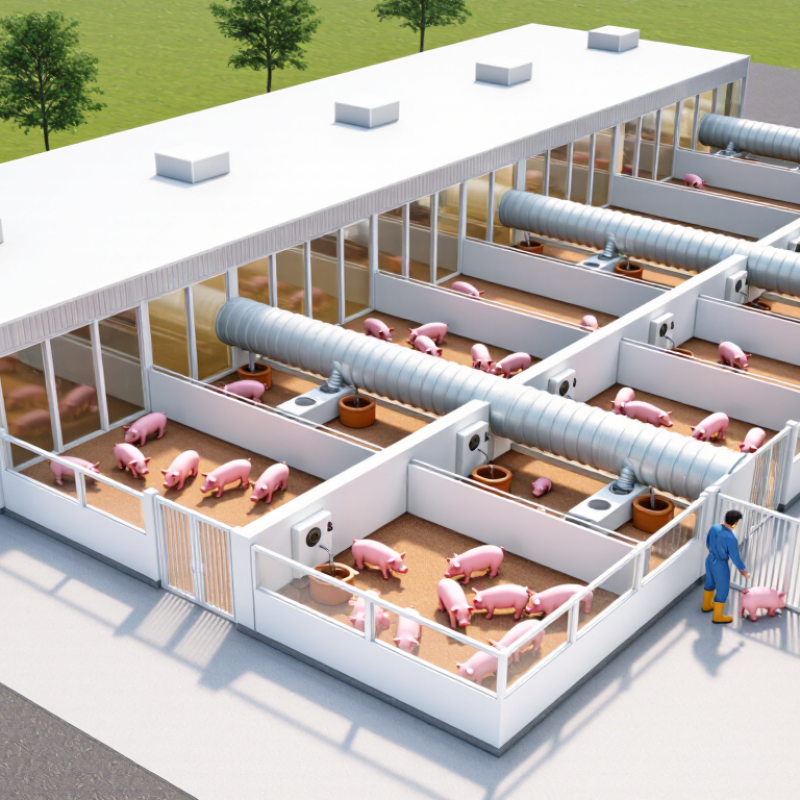
Define the Nursery House Requirements for Piglet Health and Growth
7 Tips for Choosing a Piglet Nursery House
Define nursery requirements around piglet health and growth, not just building cost. Begin with stable temperature, low drafts, and dry flooring. AHDB guidance recommends approximately 26–28°C for newly weaned pigs, then reducing temperature by about 2°C weekly. Install adjustable ventilation, because warm air can still feel uncomfortable when humidity and ammonia rise. Teagasc reports that poor air quality can reduce feed intake and increase respiratory risk. I would place sensors at piglet height, not near the ceiling.
Water access needs careful planning. Provide clean drinkers that piglets can reach without crowding. Check flow rates daily, especially after cleaning. Feeders should offer enough space for simultaneous eating. Solid dividers can reduce fighting, while visible inspection lines help workers notice empty feeders, coughing, or uneven growth. A simple layout often works better.
Biosecurity also shapes nursery design. Use washable surfaces, separate clean and dirty routes, and allow complete drying between groups. The EU’s farm animal welfare framework emphasizes suitable housing, hygiene, ventilation, and regular inspection. Those requirements sound basic, but they are often missed during busy turnover periods. My own weak point would be relying too heavily on automatic alarms. A human still needs to walk through the room, feel the floor, watch breathing, and record daily behavior. Growth targets should be checked against farm records and professional veterinary advice, rather than copied from another unit.
