What Are the Top Galvanized Tube Types from China?
Choosing the right Galvanized Tube from China requires more than comparing prices. Buyers must examine coating quality, steel grade, dimensions, weld consistency, and factory experience. A bright surface can look impressive, yet appearance alone cannot prove long-term corrosion protection.
Tom Langill, Technical Director of the American Galvanizers Association, offers a practical principle: “Good galvanizing begins with good steel design.” This idea matters when comparing Chinese tube suppliers. Hot-dip galvanized tubes usually provide a thicker zinc layer and suit outdoor structures, agricultural frames, guardrails, and construction supports. Pre-galvanized tubes may offer cleaner surfaces and efficient production for lighter applications. Square, rectangular, and round tubes serve different structural and fabrication needs.
Small details matter.
This article will examine the top Galvanized Tube types commonly supplied from China. It will compare hot-dip galvanized, pre-galvanized, welded, seamless, round, square, and rectangular options. The discussion will also consider zinc coating thickness, dimensional tolerance, corrosion resistance, surface treatment, and common international standards. Product certificates, coating tests, and sample inspections deserve attention. They are not decorative paperwork.
Still, no supplier comparison is perfect. Factory photos may be outdated. A certificate may describe a batch, not every shipment. Even experienced buyers can overlook welding quality or inconsistent wall thickness. A reliable decision combines technical documents, physical samples, production audits, and clear contract requirements. China offers broad manufacturing capacity, but quality varies considerably. Careful verification remains essential.
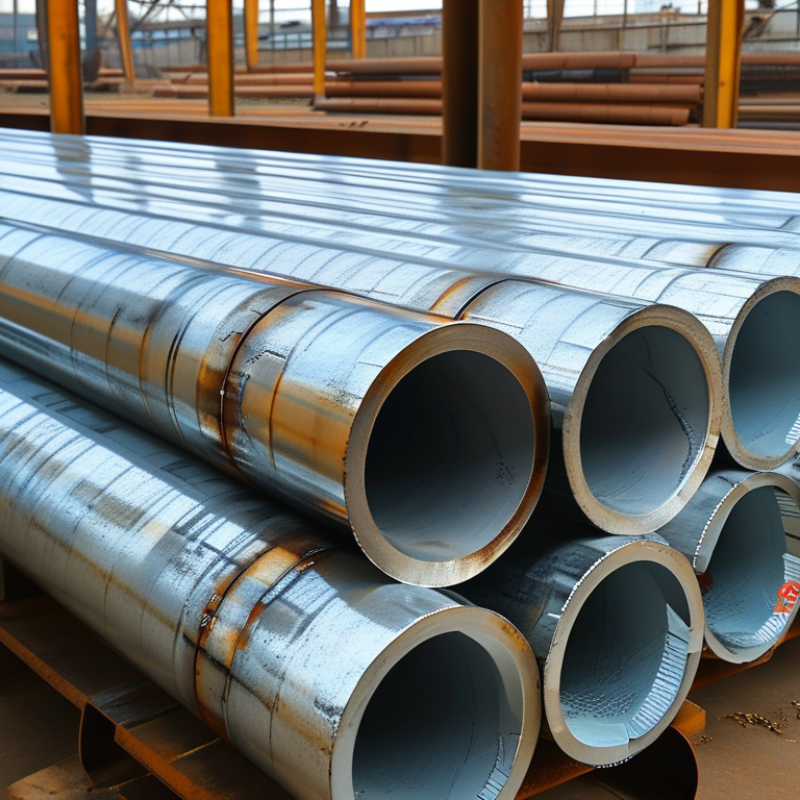
Chinese Galvanized Tube Categories Under GB/T 3091, ASTM A53, and ASTM A500
What Are the Top Galvanized Tube Types from China?
Chinese galvanized tubes are commonly selected under GB/T 3091, ASTM A53, or ASTM A500. Each standard serves a different engineering purpose.
GB/T 3091
GB/T 3091 covers welded steel pipes for low-pressure fluid service. These tubes are often hot-dip galvanized after forming. They suit water lines, sprinkler piping, and general construction. Inspectors usually check outside diameter, wall thickness, zinc coating, weld appearance, and threaded ends. A bright surface is not enough. Coating adhesion matters more.
ASTM A53 and ASTM A500
ASTM A53 includes welded and seamless pipe for mechanical and pressure applications. Galvanized A53 pipe is available in several manufacturing types and commonly uses Grade A or Grade B steel. It is practical for piping systems, handrails, and exposed utility lines. ASTM A500 is different. It covers structural tubing in round, square, and rectangular shapes. These sections support frames, columns, barriers, and equipment bases. Their structural design requirements deserve closer attention than fluid-flow assumptions.
The distinction is easy to miss. A square galvanized tube may look suitable for piping, but ASTM A500 focuses on structural performance. Likewise, an A53 pipe should not automatically replace a tube designed for load-bearing work. Chinese suppliers may offer custom lengths, zinc weights, and end treatments, but buyers should confirm the exact edition, test certificates, dimensions, and galvanizing method. Small details matter. In practice, incomplete drawings can create avoidable disputes, so specifications should state the standard and intended service clearly.
