
147 Mill Ridge Rd Suite 232
Lynchburg, Virginia 24502
Phone 757-982-3665

Top Silicon Diode Suppliers for Global Buyers

Choosing reliable Silicon Diode suppliers requires more than comparing prices on a product page. Global buyers need evidence of electrical consistency, manufacturing capability, delivery performance, and technical support. A diode that looks suitable on paper may behave differently under heat, switching stress, or repeated reverse voltage.

This guide examines suppliers through practical buying criteria. These include forward voltage, reverse leakage, surge capability, package options, tolerance control, and operating temperature. It also considers datasheet quality, sample availability, minimum order quantities, lead times, and factory traceability. For example, engineers may compare leakage readings from samples tested at 25°C and 125°C, rather than trusting a single headline specification. Small details matter.

Supplier experience matters. Established manufacturers often provide application notes, failure analysis, and dependable revision control. However, company size alone does not guarantee a perfect fit. A smaller specialist may offer better customization or faster engineering responses. Public information can also be incomplete, especially for regional distributors and contract manufacturers. Buyers should verify certifications, production locations, authorized distribution channels, and recent customer references before placing large orders.

The companies discussed here represent different strengths, including high-volume production, automotive-grade quality, power electronics expertise, and flexible regional service. Their suitability depends on voltage range, current demand, package design, and risk tolerance. There is no universal winner. Even this evaluation has limits, because pricing and capacity can change quickly. Careful sampling remains essential. A short laboratory test may reveal more than an attractive supplier profile.
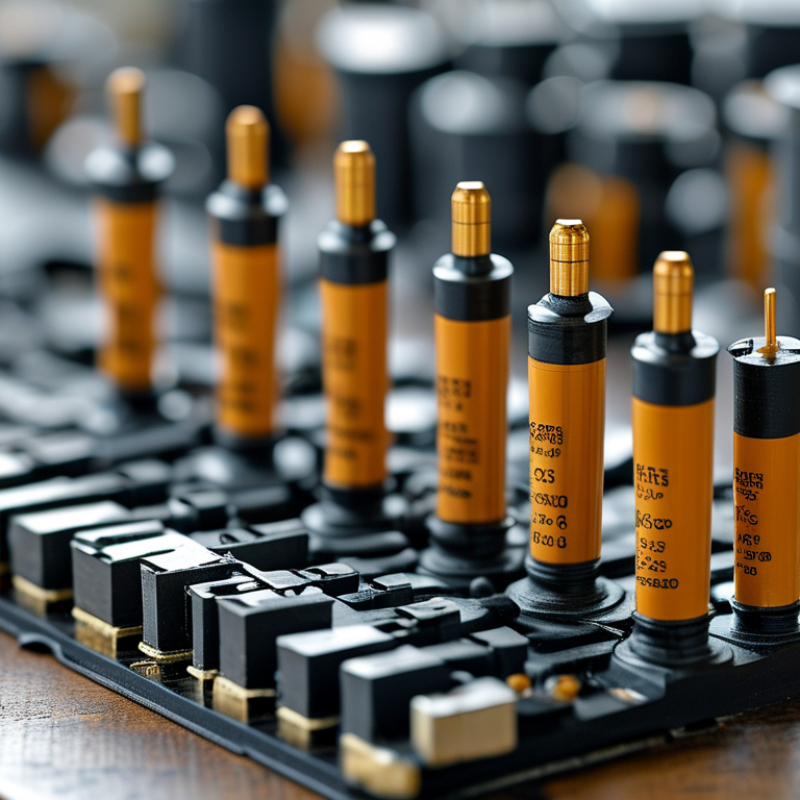
Top Silicon Diode Suppliers for Global Buyers

Silicon Diodes: Functions, Types, and Key Technical Features

Silicon diodes guide current in one direction through a PN junction. They are widely used in rectifiers, protection circuits, signal switching, and power supplies. Standard rectifier diodes handle high current but switch slowly. Fast-recovery types reduce reverse-recovery losses in high-frequency equipment. Zener diodes regulate voltage during controlled breakdown. TVS diodes absorb short voltage spikes and protect sensitive components.

Forward voltage, reverse voltage, average current, surge current, and leakage current are key technical features. Junction temperature also matters. A diode may pass its rated current in a cool test, yet perform poorly inside a sealed enclosure. Package design affects heat transfer, vibration resistance, and installation speed. These details deserve careful comparison.

Tips: Ask suppliers for complete datasheets, test conditions, and lot traceability. Compare ratings at the same temperature. Check reverse-recovery time for switching designs. For global purchasing, confirm packaging standards, inspection records, and replacement availability. A low unit price can hide higher thermal risks. It happens often.

Engineers should test samples under real voltage, load, and temperature conditions. Measure forward drop after heating, not only at room temperature. Review derating curves before approving a supplier. No selection is perfect. Sometimes a larger package improves reliability but increases assembly cost. That trade-off needs honest review, not optimistic assumptions. Reliable sourcing combines verified specifications, practical testing, and clear communication with the diode manufacturer.

How to Evaluate Global Silicon Diode Suppliers

Top Silicon Diode Suppliers for Global Buyers

How to Evaluate Global Silicon Diode Suppliers

Evaluating a global silicon diode supplier starts with evidence, not polished promises. Request current datasheets, test conditions, package drawings, and lifecycle status. Check reverse voltage, forward current, leakage, switching speed, and thermal limits against your actual circuit. A diode rated at 1,000 volts may still fail under heat, surges, or poor cooling. Ask for lot-level test reports. Small details matter.

Traceability deserves close attention. Reliable suppliers should identify wafer sources, assembly locations, date codes, and inspection procedures. Review certifications relevant to your market and confirm that documents match the shipped product. Sample testing can reveal inconsistent markings, unusual forward-voltage readings, or fragile leads. It costs time. It can prevent expensive field returns.

Communication is another practical test. Send technical questions and measure the response quality, not only its speed. Can the supplier explain tolerance limits, moisture handling, and failure analysis? Ask how they manage engineering changes and sudden capacity shortages. A written change-notification process is essential for international production. Pricing alone is a weak filter. Very low quotes may exclude testing, packaging controls, or dependable after-sales support.

No supplier looks perfect. That is normal. I would record open risks instead of hiding them in a purchasing spreadsheet. Compare samples from different lots, verify delivery performance, and inspect packaging after transit. A supplier that admits limitations may be more dependable than one offering effortless certainty.

Leading Supplier Regions and Manufacturing Capabilities

Top Silicon Diode Suppliers for Global Buyers

Leading Supplier Regions and Manufacturing Capabilities

Global buyers often compare silicon diode suppliers by region, process control, and delivery stability. East Asia remains strong in high-volume wafer fabrication, assembly, and automated testing. Southeast Asia supports large-scale packaging operations, especially for standard rectifiers and switching diodes. Europe and North America often provide tighter engineering support, specialized power devices, and documented qualification processes.

Capabilities differ sharply between factories. A mature supplier may control crystal growth, wafer diffusion, metallization, molding, and final electrical testing. This vertical control can improve consistency across production lots. Other suppliers depend on external wafer sources but offer flexible assembly and faster customization. Buyers should review reverse voltage, forward current, leakage limits, thermal resistance, and surge performance. These figures matter more than a polished catalog.

Traceability matters.

Reliable purchasing teams request sample reports, process-change notices, and test records from recent batches. They also inspect packaging conditions, moisture controls, and storage dates. Automotive and industrial users may require extended temperature testing, reliability screening, and formal quality certifications. Medical and energy applications often need even stronger documentation. A low quote can hide longer lead times or limited engineering support. Capacity is not everything. One practical weakness remains: public supplier data may not reveal subcontracting arrangements. An on-site audit or independent inspection can expose that gap before production begins. I would also compare pilot-lot results with full-volume output, because early samples can look better than routine manufacturing.

Top Silicon Diode Suppliers for Global Buyers - Leading Supplier Regions and Manufacturing Capabilities

Supplier Region Primary Manufacturing Strengths Common Silicon Diode Types Typical Electrical Range Typical Package Formats Wafer and Assembly Capability Quality and Compliance Focus Typical Export Lead Time
East Asia High-volume discrete semiconductor production, automated assembly, cost-efficient testing, and broad standard-product coverage. General-purpose rectifiers, fast-recovery diodes, bridge rectifiers, Zener diodes, switching diodes, and automotive-grade devices. Approximately 20–6,000 V repetitive peak reverse voltage and 0.1–100 A average forward current, depending on product family. Axial lead, surface-mount, TO-style, power packages, and molded bridge packages. Commonly supports 100 mm, 150 mm, and 200 mm silicon wafer processing, with high-volume die attach, wire bonding, molding, and electrical testing. ISO 9001 is common; automotive programs may use IATF 16949 and AEC-Q101 qualification practices. 4–10 weeks for standard products; longer for customized specifications or constrained capacity.
Japan Precision process control, high-reliability power semiconductors, automotive electronics, and low-defect manufacturing. Low-leakage switching diodes, fast-recovery rectifiers, temperature-compensated Zener diodes, and high-reliability automotive devices. Approximately 30–4,500 V and 0.05–50 A, with strong emphasis on controlled leakage, switching speed, and thermal performance. Small-outline surface-mount, axial lead, power leaded, and compact automotive packages. Mature 100–200 mm wafer processes, fine die control, automated inspection, and stringent burn-in or reliability screening for selected product lines. Strong focus on ISO 9001, IATF 16949, AEC-Q101, traceability, and long-term reliability testing. 8–16 weeks for qualified production parts; engineering or automotive approvals can extend the schedule.
Taiwan Flexible foundry and packaging ecosystem, strong small-signal production, rapid customization, and export-oriented supply chains. Small-signal switching diodes, rectifiers, Zener diodes, bridge rectifiers, and compact power devices. Approximately 10–2,000 V and 0.01–30 A, covering consumer, industrial, lighting, and communications equipment. SOD-style, SOT-style, SMA/SMB/SMC, axial lead, and miniature bridge packages. 100 mm, 150 mm, and 200 mm wafer production is common; outsourced assembly and test capacity supports high product variety. ISO 9001 and ISO 14001 are common; selected suppliers provide automotive and halogen-free product documentation. 3–8 weeks for catalog items; 8–14 weeks for new molds, new ratings, or customized packaging.
Mainland China Large-scale commodity production, broad packaging capacity, competitive pricing, and expanding capability in industrial and automotive components. Standard rectifiers, bridge rectifiers, Zener diodes, fast-recovery diodes, TVS-related silicon devices, and power rectifiers. Approximately 20–6,000 V and 0.1–200 A, depending on die size, package, and cooling design. Axial, DO-series, SMA/SMB/SMC, TO-style, press-fit, stud, and bridge packages. 100–200 mm wafer processing is available across the market, supported by extensive assembly, molding, sorting, and test facilities. ISO 9001 is widely available; export buyers should verify RoHS, REACH, conflict-minerals, UL, and automotive documentation by product. 3–8 weeks for standard stock-supported parts; 8–16 weeks for new tooling or larger production orders.
Europe High-reliability automotive and industrial power electronics, specialized rectifiers, engineering support, and strict process documentation. Automotive rectifiers, high-voltage diodes, fast-recovery devices, power modules, and application-specific silicon diode solutions. Approximately 50–6,500 V and 1–600 A for discrete devices and power assemblies, subject to package and cooling conditions. Power stud, press-pack, TO-style, module, axial lead, and high-current industrial packages. Specialized 150–200 mm wafer lines, advanced die bonding, pressure-contact assembly, module integration, and extended reliability testing. Strong emphasis on IATF 16949, AEC-Q101, ISO 9001, functional safety documentation, and full lot traceability. 10–20 weeks for standard industrial products; custom power assemblies may require 20 weeks or more.
North America High-reliability aerospace, defense, telecommunications, medical, and industrial applications, with strong qualification and engineering support. Mil-spec rectifiers, high-reliability switching diodes, power rectifiers, radiation-tolerant options, and application-specific assemblies. Approximately 50–10,000 V and 0.01–1,000 A across discrete and power-device product categories. Hermetic packages, axial lead, TO-style, surface-mount, stud, press-fit, and power-module formats. 100–200 mm wafer capability exists alongside specialized assembly, hermetic sealing, screening, burn-in, and custom test services. ISO 9001, AS9100, AEC-Q101, MIL-STD screening, PPAP support, and detailed traceability may be available by product line. 8–20 weeks for qualified products; custom screening, hermetic packages, and regulated applications may require additional time.
South Asia Growing capacity in standard rectifiers, bridge devices, discrete packaging, contract manufacturing, and cost-sensitive industrial applications. General-purpose rectifiers, bridge rectifiers, Zener diodes, switching diodes, and selected high-current devices. Approximately 20–3,000 V and 0.1–100 A, depending on manufacturing scale and package design. Axial lead, DO-series, surface-mount, TO-style, and molded bridge packages. Primarily 100–150 mm wafer-related supply and discrete assembly capabilities, with selected suppliers using imported or externally processed dies. ISO 9001 is common; buyers should confirm RoHS, REACH, automotive qualification, and reliability-test scope for each supplier. 6–14 weeks for standard products; schedules vary with wafer sourcing, tooling, and export documentation.

Note: Electrical ratings, certifications, package options, manufacturing processes, and delivery times vary by supplier and product family. Buyers should verify current datasheets, qualification reports, compliance documents, and production capacity before placing orders.

Quality Standards, Certifications, and Product Reliability

Top Silicon Diode Suppliers for Global Buyers

Quality starts with evidence, not attractive datasheets. A reliable silicon diode supplier should provide ISO 9001 certification, stable lot traceability, and clear production records. Automotive buyers may also require IATF 16949 and AEC-Q101 qualification. IEC 60747 test methods help verify electrical performance.

Check reverse leakage, forward voltage, surge current, and thermal resistance under stated conditions. WSTS reported that the global semiconductor market reached approximately 611 billion dollars in 2024, with strong demand from automotive and industrial applications. That growth increases supply pressure. Quality checks cannot become an afterthought.

Product reliability appears in small details. Ask for accelerated life-test results, thermal cycling data, humidity testing, and failure-analysis reports. Packaging also matters. Moisture-sensitive components need controlled storage, sealed bags, and readable date codes.

A certificate is useful, but it does not prove every shipment is consistent. This is where buyers sometimes rely too heavily on paperwork. Sample testing should compare multiple production lots, not only one attractive batch.

Independent laboratory verification may expose weak surge performance or excessive leakage.

Tips: Request a certificate of conformity for every shipment. Confirm the factory location and authorized test laboratory. Review change-control procedures before approving a supplier. Keep retained samples for future comparison. If the supplier refuses raw test limits, pause the evaluation. Reliability is measurable, but no process is perfect. Allow room for rechecking assumptions.

Pricing, Logistics, and Buyer Selection Criteria

Top Silicon Diode Suppliers for Global Buyers

Pricing, Logistics, and Buyer Selection Criteria

Silicon diode pricing depends on voltage rating, current capacity, package style, and order volume. A low unit price can hide tooling, inspection, or freight charges. Request quotes at several quantities, such as 1,000, 10,000, and 50,000 pieces. Compare the complete landed cost, not only the factory price. Ask whether prices remain valid for thirty or sixty days. Semiconductor materials can change quickly. Payment terms also affect the real purchasing cost. For new suppliers, smaller trial orders reduce exposure and reveal packing quality.

Logistics needs equal attention. Confirm lead time, production location, shipping terms, carton dimensions, and customs documents. Diodes should arrive in sealed moisture-resistant bags, with clear lot labels and date codes. Ask for tracking and a contingency plan during port delays. Request samples before approving mass production. Review forward voltage, reverse leakage, surge rating, and temperature performance against your design. Independent inspection may be worthwhile for critical applications. Supplier records should include test methods, traceability, and corrective-action procedures. Be careful with impressive spreadsheets; historical data may be incomplete or selectively presented. Buyers should also examine communication speed and technical answers. A supplier that avoids simple questions may create expensive delays later. My own assumption would be imperfect: the cheapest quote sometimes wins, but only when quality evidence and delivery performance support it.

Top Silicon Diode Suppliers for Global Buyers: Pricing, Logistics, and Selection Criteria

A normalized procurement-priority framework for comparing silicon diode suppliers. Price competitiveness, quality consistency, delivery performance, compliance, and logistics capability are common decision dimensions in global sourcing.

The index is a planning benchmark from 0 to 100, not supplier market share or company-specific performance data. Buyers should validate each category against quotations, inspection records, certifications, and shipping terms.

Article Source: