Top 10 Junction Box Cabinet Manufacturers for Global Buyers
Choosing a reliable Junction Box Cabinet manufacturer can influence project safety, installation speed, and long-term maintenance. Global buyers often compare suppliers across technical capability, production consistency, certification support, and communication quality. The right choice depends on the application, not only the catalog price.
This guide introduces ten manufacturers serving industrial, commercial, energy, and infrastructure markets. Each company is considered through practical criteria, including enclosure materials, ingress protection, corrosion resistance, cable entry options, thermal management, and customization capacity. Factory experience matters. A cabinet installed beside a dusty conveyor requires different protection from one used in a coastal substation. Buyers should also examine welding quality, gasket compression, hinge strength, lock design, and internal mounting space.
Reliable suppliers normally provide drawings, material specifications, inspection records, and clear delivery terms. Some can support stainless steel fabrication, powder coating, EMC solutions, or complex terminal layouts. Others may offer better value for standardized volumes. That difference is easy to miss during a quick quotation review. Details matter.
The ranking is intended as a practical starting point, not an absolute judgment. Manufacturer capabilities, certifications, prices, and lead times can change by region and project size. Buyers should request current test reports, sample photos, reference projects, and production schedules before placing an order. We have also included areas that deserve closer reflection, because no supplier performs equally well in every market. Careful verification remains essential.
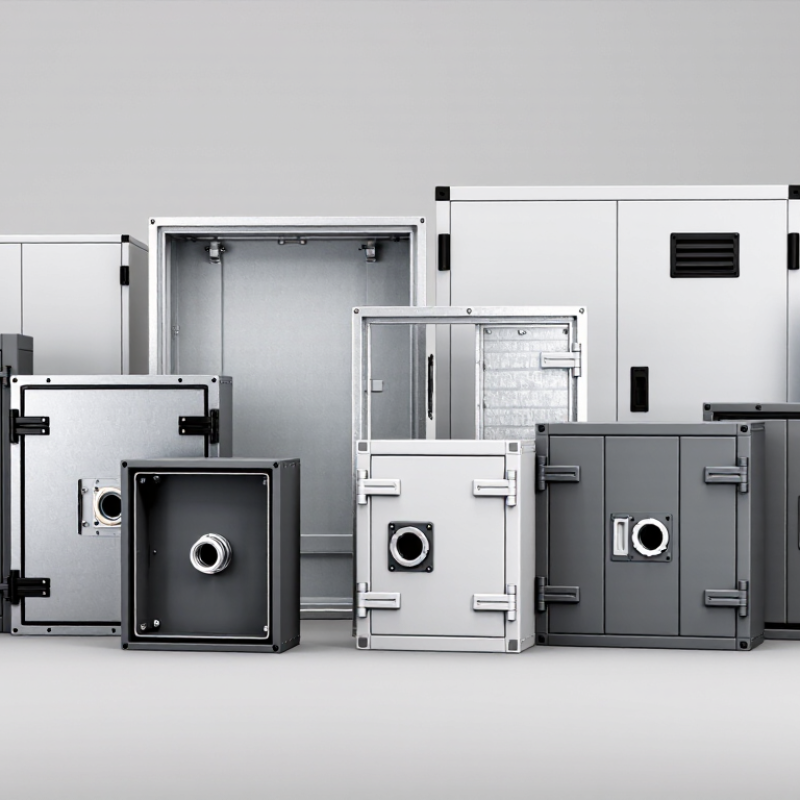
Global Junction Box Cabinet Market: IP65–IP67 and NEMA 4X Standards
For global buyers comparing the top 10 junction box cabinet manufacturers, enclosure standards deserve close attention. IP65 protects against dust and water jets, while IP67 adds temporary immersion protection. These ratings are tested under specific conditions. They do not guarantee performance in every installation.
NEMA 4X is widely selected for outdoor, coastal, food-processing, and chemical environments. It addresses dust, hose-directed water, and corrosion resistance. However, NEMA 4X and IP67 are not identical certifications. Buyers should request test reports, material specifications, gasket details, and cable-entry information. Stainless steel, coated steel, and reinforced polymer cabinets behave differently in sunlight, salt air, and repeated cleaning.
Details matter. A poorly compressed gasket can defeat an excellent enclosure rating. I have seen installation teams focus on the cabinet body and overlook cable glands. That was an expensive lesson. Check door alignment, hinge quality, drainage design, and mounting hardware before approval. Ask whether the stated rating applies after drilling and field modifications. It often does not. Manufacturers with verified testing, clear documentation, and practical installation guidance offer stronger reliability than suppliers relying on rating labels alone. Thin panels may look efficient, but they can flex around fasteners. That weakness deserves a closer review.
Top 10 Junction Box Cabinet Manufacturers by Region and Product Range
Top 10 Junction Box Cabinet Manufacturers for Global Buyers
Top 10 Junction Box Cabinet Manufacturers by Region and Product Range
Global buyers often compare junction box cabinet manufacturers by region, certification, enclosure material, and product depth. A practical top-ten review should not rank price alone. It should examine factory experience, inspection records, export support, and documented field performance. Keep this point visible.
Regional strengths vary. European manufacturers often focus on stainless steel cabinets, modular layouts, and demanding ingress protection. North American suppliers commonly offer larger industrial cabinets, flexible wiring space, and project-based customization. Asian producers may provide broad product ranges, fast tooling, and competitive volume pricing. Regional fit matters. In the Middle East, Africa, and Latin America, buyers may value heat resistance, dust control, and stable replacement supply.
Top product ranges usually include mild-steel, stainless-steel, polycarbonate, and outdoor-rated junction box cabinets. Buyers should check wall-mounted and floor-standing designs, cable entry options, sealing systems, and corrosion resistance. Strong manufacturers publish drawings, material grades, IP ratings, temperature limits, and test methods. They also clarify whether accessories are standard or optional. That detail prevents surprises.
Yet some rankings remain imperfect. Public case studies can be selective, and regional service claims need verification. Request samples, audit production controls, and compare lead times under real order conditions. A supplier with fewer models may still deliver better consistency. This is easy to miss.
Top 10 Junction Box Cabinet Manufacturers for Global Buyers
Regional and product-range reference based on IEC 60529 ingress-protection classifications
The chart compares representative junction box cabinet application ranges by their specified IP protection level. The first digit indicates protection against solid objects and dust, while the second digit indicates protection against water. IP68 conditions are defined by the manufacturer for the specific product and application.
Reference: IEC 60529, Degrees of protection provided by enclosures (IP Code).
Global Buyer Checklist: Customization, Compliance, Pricing, and After-Sales Support
When comparing junction box cabinet manufacturers, global buyers should inspect more than polished catalogs. Ask for drawings, material grades, enclosure dimensions, mounting-hole tolerances, and cable-entry options. A reliable supplier explains how stainless steel, powder-coated steel, or reinforced polymer performs in dust, moisture, heat, and corrosion. Small details matter. Request a sample or factory inspection before approving a large order. Photographs alone can hide uneven welds, thin hinges, or poorly sealed gaskets.
Compliance needs written evidence, not vague claims. Check applicable IP or NEMA performance, electrical safety documentation, material traceability, and test reports from recognized laboratories. Requirements differ by destination and installation environment, so confirm them with a qualified local engineer. Ask whether the cabinet supports grounding, thermal management, and flame-retardant components when needed. A certificate copied into a quotation is not enough. Verify model numbers and report dates.
Compare total landed cost, not unit price. Include tooling, customization, packaging, freight, taxes, spare gaskets, and inspection fees. Clarify minimum order quantities and price changes for small revisions. After-sales support should include response times, replacement-part availability, warranty boundaries, and a named technical contact. Keep these promises in the contract. Reality can be messy. One overlooked dimension can delay installation for weeks, even when the cabinet itself is well made. A trial order, inspection checklist, and written acceptance criteria reduce that risk.