
What Are the Top PCB Terminal Block Types in 2026?
A Pcb Terminal Block can look like a small green component on a crowded board. Yet its pitch, clamping method, and current rating affect wiring access, assembly time, and long-term reliability. In 2026, engineers will still weigh familiar choices: screw, spring-clamp, push-in, pluggable, and barrier-style designs. The right option depends on the application—not on a trend alone.
Market context helps, but it needs careful interpretation. Grand View Research’s Terminal Blocks Market report estimated the global market at USD 4.13 billion in 2023 and projected a 5.7% compound annual growth rate through 2030. That figure covers terminal blocks broadly; it is not a PCB-only forecast. Quality expert W. Edwards Deming is widely associated with the principle, “Quality is everyone’s responsibility.” Applied here, that means checking the whole connection: wire size, board layout, temperature rise, vibration, and access for maintenance. Small details matter.
This guide compares the leading PCB terminal block types by connection method, installation needs, and practical trade-offs. It also flags details that product tables can hide, such as tool access beside a neighboring enclosure or whether a plug can be removed without disturbing adjacent wiring. Those checks are not glamorous. They can prevent avoidable redesigns. Use the comparisons as a starting point, then confirm ratings and suitability against the manufacturer’s current datasheet and the actual operating conditions.
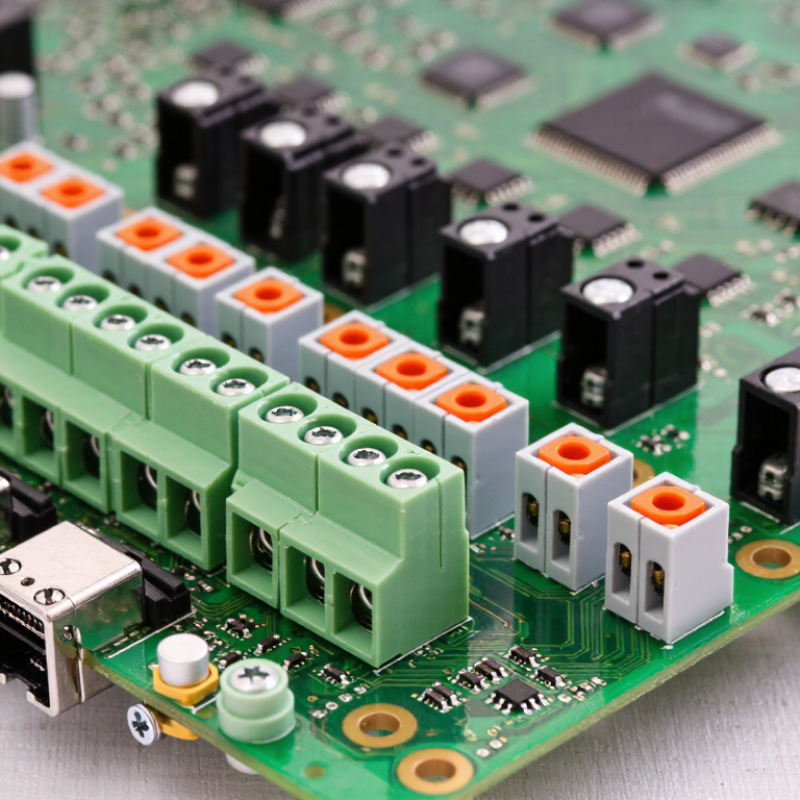
What PCB Terminal Blocks Are and How They Mount
What Are the Top PCB Terminal Block Types in 2026?
What PCB Terminal Blocks Are and How They Mount
A PCB terminal block connects external wires to a printed circuit board. Inside, a screw or spring clamp holds each conductor against a metal contact. This creates a removable connection for power or signals. You can find them in control panels, sensors, and compact equipment. Their pitch, current rating, and wire capacity must suit the board and application.
Most PCB terminal blocks mount through holes in the board. Metal pins pass through drilled holes and are soldered to copper pads, creating a firm mechanical and electrical joint. Some designs use surface-mount soldering, while plug-in types pair a fixed board header with a removable connector. During assembly, align the pins carefully and check the specified soldering method. A block that looks straight can still sit unevenly. Keep it square. That small detail matters when wires are later inserted or removed.
