
Top Portable Gas Detector Manufacturers in China?
Choosing a Portable Gas Detector manufacturer in China is not just a price comparison. In a plant, a useful instrument must detect the gases workers face, show clear readings, and sound an alarm reliably. Battery life, sensor replacement, calibration access, and local technical support also matter. Small details matter.
The International Labour Organization’s 2023 report, A Call for Safer and Healthier Working Environments, estimates 2.93 million work-related deaths and 395 million non-fatal work-related injuries worldwide each year. These figures describe a broad workplace-safety challenge, not gas incidents alone. They underline why buyers should verify performance claims and service arrangements rather than rely on catalog language. Market studies, including Grand View Research’s Gas Detection Equipment Market report, also track demand across industrial applications. Market growth, however, does not prove that any particular detector suits a specific site.
This guide introduces Chinese manufacturers and the factors buyers can check before requesting a quotation. Compare detection ranges, sensor technologies, alarm settings, ingress protection, and calibration procedures. Ask for model-specific documentation, test records, warranty terms, and examples of after-sales support. A brochure may look convincing. Not on paper. Confirm whether the instrument fits the actual work: a technician carrying it through a dusty workshop needs different practical assurances from a fixed monitoring setup. Manufacturer claims should be independently checked against the intended use and relevant technical requirements. The comparison is not perfect; product lines change, and public information can be uneven. That is worth remembering.
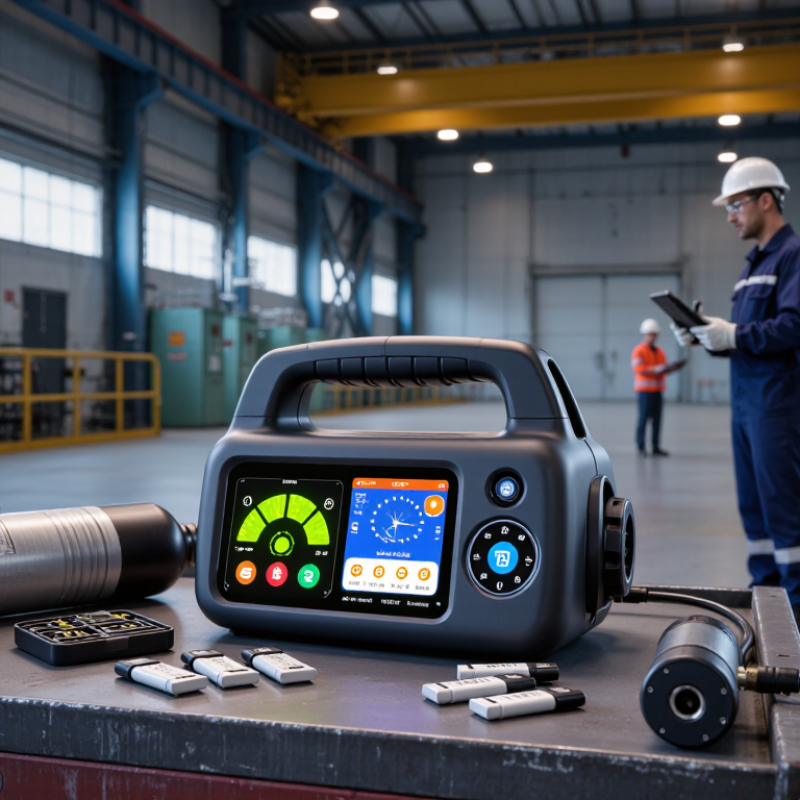
What Portable Gas Detectors Measure and How They Work
Portable gas detectors measure oxygen, toxic gases, combustible gases, or volatile organic compounds, depending on their sensors. A worker may clip one to a belt while entering a maintenance area. Its display shows a live concentration, often in parts per million, percent by volume, or percent of the lower explosive limit. Small details matter.
Different sensors detect gases in different ways. Electrochemical cells produce an electrical signal when a target gas reacts inside the sensor. Catalytic-bead sensors measure heat changes caused by combustible gas oxidation. Infrared sensors detect how gas absorbs specific wavelengths of light. Photoionization detectors respond to many volatile organic compounds, but they do not identify every compound individually. A detector’s range and sensor type determine what its readings mean.
Gas reaches the sensor by diffusion through an inlet or through a pump that draws in a sample. Alarms sound or vibrate when readings cross set thresholds. Yet a display is not a guarantee. Humidity, sensor age, blocked inlets, and cross-sensitivity can affect results. A bump test checks whether gas triggers the alarms; calibration checks the reading against a known reference. These checks can be overlooked during busy shifts. No instrument is perfect, and understanding its limits is part of using it well.
