
Why Choose Filter Cartridges for Water Filtration?
Choosing the right water treatment method can feel less obvious than it appears. A clear glass of water does not prove that every contaminant has been removed. Filter Cartridges offer a practical, measurable option for homes, offices, laboratories, and industrial systems. They fit inside compact housings, support different filtration grades, and can target sediment, chlorine, odors, or specific impurities.
Peter S. Cartwright, a recognized water treatment consultant, puts it plainly: “The filter is only as good as the application.” That principle matters. A five-micron cartridge may capture visible particles, while activated carbon can improve taste and reduce chlorine. Neither choice is universal. The source water, flow rate, pressure, temperature, and target contaminant must guide selection.
Small details matter. A cartridge clogged with rust may reduce pressure before it looks dirty. An oversized system may waste money without improving safety. I have also seen people delay replacement because the water still appears clear. That is a weak assumption. Filter Cartridges require scheduled inspection, correct installation, and honest performance expectations.
Their main advantage is control. Users can replace one filtration stage without rebuilding an entire system. Maintenance is usually straightforward. Still, convenience should not replace testing. Independent laboratory results and manufacturer specifications provide stronger evidence than marketing claims. The best choice balances contaminant reduction, service life, operating cost, and application demands. Sometimes, a simpler system performs better.
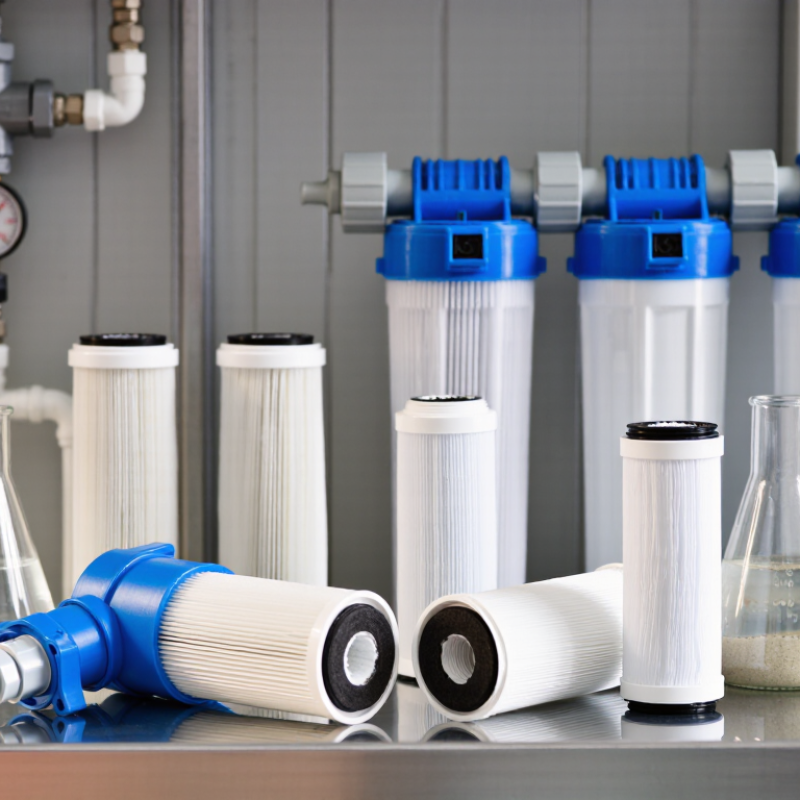
Filter-Cartridge Basics: Sediment Capture, Adsorption, and Membrane Separation
Why Choose Filter Cartridges for Water Filtration?
Filter cartridges offer a practical way to target different water problems. Sediment cartridges trap visible particles such as sand, rust, and pipe scale. A clear housing can reveal gradual discoloration. That visual change helps operators judge when replacement may be necessary. However, appearance alone is not a reliable performance test.
Adsorption cartridges commonly use activated carbon to reduce chlorine, certain odors, and some organic compounds. Their effectiveness depends on contact time, water chemistry, and cartridge condition. Membrane cartridges separate much smaller particles through fine pores. They can reduce microorganisms or dissolved contaminants when correctly selected and maintained. The exact result depends on pore size and system design. I have seen users choose the finest cartridge available, then face slow flow and frequent maintenance. Smaller pores are not automatically better.
Tips: Test the incoming water before choosing a cartridge. Record pressure, flow rate, and replacement dates. Change cartridges according to measured performance, not habit alone. Clean housings carefully and check seals for leaks. If water quality changes, retest the system. A cartridge may capture sediment well but cannot solve every contamination problem. This limitation deserves honest attention.
