Why Choose a Grab Hook for Global Sourcing?
Global sourcing demands more than a low unit price. It requires dependable performance, clear documentation, and consistent quality across distance. A Grab Hook can support these goals when buyers evaluate its working load limit, steel grade, heat treatment, and manufacturing controls. The right choice should feel practical, not mysterious.
David Duerr, a recognized crane and rigging consultant, says, “The safest lift begins with choosing the right component for the load.” That principle matters when comparing suppliers from different regions. A trustworthy manufacturer should provide inspection records, product dimensions, batch identification, and transparent testing procedures. Buyers should also examine the hook’s throat opening, chain compatibility, safety latch, and surface finish. Small details matter. A rough edge can damage chain links during repeated use.
Global sourcing can improve access to specialized factories, stable production capacity, and competitive pricing. However, distance can hide problems. Product samples may look excellent, while later batches vary. That risk deserves attention. I may be overly cautious, but reliable purchasing requires more than attractive photographs and fast replies. Request pre-shipment inspections, confirm packaging strength, and review supplier experience with international orders.
A well-selected Grab Hook should arrive ready for controlled, professional use. It should also come with understandable handling guidance. Buyers must match the hook to the intended chain, load direction, and working environment. No supplier can replace proper inspection. No catalogue can replace sound judgment. Better sourcing begins when quality is treated as evidence, not a promise.
What Is a Grab Hook and How Does It Work?
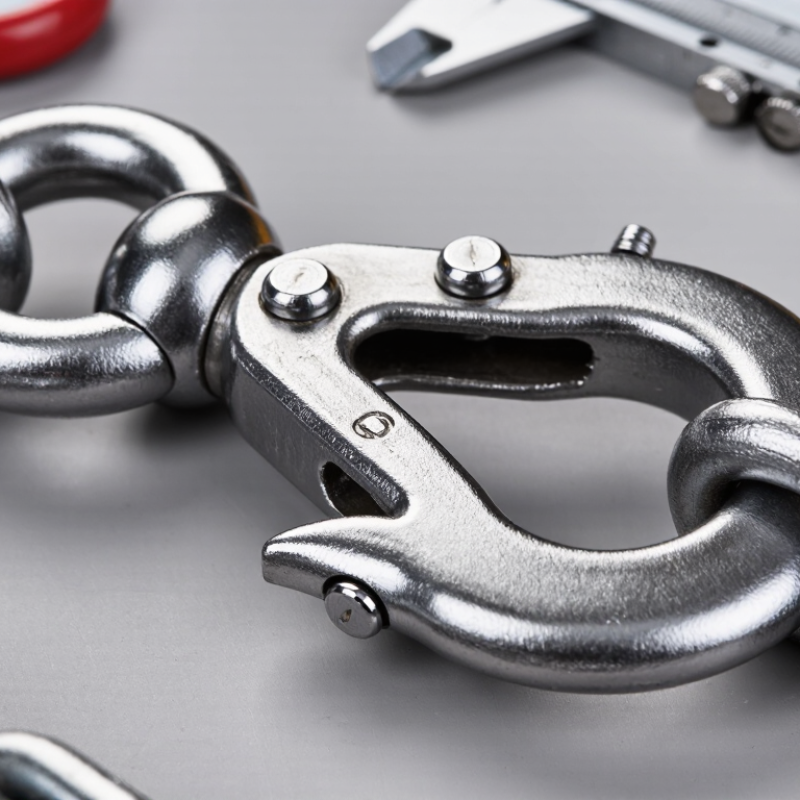
A grab hook is a forged lifting component designed to shorten a chain sling. Its throat captures a selected chain link and holds it under tension. This changes sling length without cutting, tying, or adding loose hardware. During use, the operator places the link fully into the hook bowl. The chain should sit naturally, not across the tip. If a latch is fitted, it must close correctly. The part is small. The decision is not.
For global sourcing, buyers should verify working load limit, chain grade, throat opening, heat treatment, and test documentation. Dimensions alone cannot prove safety. OSHA’s 1910.184 standard requires alloy steel chain slings to receive inspection before use each day. The U.S. Bureau of Labor Statistics recorded 1,075 fatal injuries among construction and extraction workers in 2023. That figure does not isolate grab hooks, but it shows why connection details deserve attention. A supplier should provide traceability, inspection criteria, and clear marking on every component.
A grab hook works best when its design matches the chain size and loading direction. Side loading, tip loading, or an incomplete link connection can reduce performance sharply. Buyers should also request samples before placing large orders. Real chain fit can expose problems that drawings miss. I would not rely on a catalog photo alone. ASME B30.9 and applicable regional standards can guide sling selection, but local procedures still matter. A cheaper hook may pass visual checks and fail through poor material control.
Why Choose a Grab Hook for Global Sourcing? - What Is a Grab Hook and How Does It Work?
| Data Dimension | Grab Hook Information | How It Works in Practice | Sourcing Consideration |
|---|---|---|---|
| Product Definition | A grab hook is a load-bearing hook designed to engage a specific link of a chain. | The chain link is seated in the hook bowl, allowing the chain to be connected, shortened, or secured. | Confirm the hook type, chain size, rated capacity, material, and applicable standard before purchasing. |
| Primary Function | Chain connection, chain shortening, load restraint, and tension adjustment. | The operator selects the required chain link and places it into the hook throat or bowl to obtain the desired working length. | Useful when adjustable chain length is more important than permanent attachment. |
| Hook Engagement | The hook bowl supports the chain link while the throat helps retain it during loading. | Force is transferred through the hook body and the properly seated chain link, rather than through the hook tip. | The chain must sit fully in the bowl; tip loading and side loading can reduce safety and damage the hook. |
| Common Configurations | Clevis Grab Hook, eye grab hook, self-locking grab hook, and grab hook with a latch. | Clevis versions connect directly to compatible chain links; eye versions attach to chain, wire rope, or fittings through an opening. | Choose the connection style according to the existing chain assembly and the required installation method. |
| Typical Materials | Forged alloy steel is commonly used for lifting and heavy-duty applications; carbon steel is used in selected restraint applications. | Heat treatment and forging can improve strength and resistance to deformation when properly controlled. | Request material certificates, heat-treatment records, and mechanical test information for safety-critical orders. |
| Load Capacity | Capacity depends on hook grade, nominal chain size, design, heat treatment, and the applicable standard. | The working load limit applies only when the hook is used in the intended configuration and correctly aligned. | Do not estimate capacity from appearance. Check permanent markings and supplier documentation. |
| Chain Compatibility | Each grab hook is designed for a defined chain diameter and chain grade range. | Correct compatibility allows the link to seat naturally without excessive clearance, binding, or point contact. | Match hook size, chain diameter, chain grade, and working load limit as a complete system. |
| Shortening Capability | A major advantage is the ability to shorten a chain without cutting or permanently modifying it. | The hook engages an intermediate chain link, reducing the effective chain length and helping control slack. | Suitable for changing load positions, securing different cargo sizes, and adjusting tie-down tension. |
| Installation Speed | Fast to install and remove when the chain and hook are accessible. | The connection is made by placing the selected chain link into the hook rather than using bolts or permanent joining processes. | Can reduce handling time, but operators still need to verify seating and load direction before applying force. |
| Common Applications | Chain slings, cargo restraint, towing-related chain assemblies, forestry work, material handling, and general industrial securing. | The hook provides a removable connection where chain length or connection position may change frequently. | Use only within the product’s approved application; lifting people requires equipment specifically rated for personnel lifting. |
| Safety Features | Some models include a latch or self-locking mechanism to help prevent unintended disengagement. | A latch closes the throat after the chain link is inserted, but it does not increase the rated capacity of the hook. | Select a latch when accidental release is a concern, while still preventing shock loading and improper alignment. |
| Inspection Points | Inspect for cracks, excessive wear, deformation, corrosion, stretched openings, damaged threads, and faulty latches. | Visible damage or dimensional change can indicate overloading, side loading, abrasion, or unsuitable use. | Remove damaged hooks from service and follow the inspection intervals required by local regulations and site procedures. |
| Global Sourcing Value | Compact, reusable, adjustable, and available in standardized chain-compatible sizes. | A correctly specified hook can support consistent assembly, easier replacement, and more flexible inventory planning. | Compare standards, traceability, testing, surface protection, packaging, and inspection documentation—not price alone. |
| Recommended Purchasing Data | Hook type, chain diameter, chain grade, working load limit, material, finish, latch requirement, and quantity. | Complete specifications reduce the risk of receiving a hook that does not fit the chain or meet the intended load requirement. | Include dimensional drawings, marking requirements, inspection criteria, certificates, and packaging instructions in the purchase order. |
